
Author: eliyokimcohen

  • The Famous Talmudic Kamtza & Bar Kamtza Story From Every Conceivable Angle

    The Famous Talmudic Kamtza & Bar Kamtza Story From Every Conceivable Angle

    The story of Kamtza and Bar Kamtza from the ⁠Babylonian Talmud is the quintessential Jewish narrative on the dangers of sinat chinam (baseless hatred). This tragic case of public humiliation led directly to the destruction of the Second Temple in Jerusalem.

    The Narrative Arc

    1. The Accidental Invitation
      A wealthy man living in Jerusalem threw a lavish banquet. He sent his servant to invite his friend, Kamtza. Through an error, the servant instead invited the host’s enemy, Bar Kamtza.
    2. The Public Humiliation
      When the host discovered his enemy at the party, he ordered Bar Kamtza to leave. Bar Kamtza, deeply embarrassed, begged to stay, offering to pay for his individual meal, then half the party, and finally the entire feast, just to avoid the public shame of being thrown out. The host adamantly refused and physically forced him out of the room.
    3. The Silence of the Rabbis
      Several prominent rabbis were present at the banquet. They witnessed the ruthless eviction but did not intervene or protest. Bar Kamtza assumed their silence meant they approved of his humiliation.
    4. The Revenge
      Consumed by anger and a desire for vengeance, Bar Kamtza sought to punish the host and the community. He went to the Roman Emperor and falsely reported that the Jewish community was rebelling against Rome. To prove it, he suggested the Emperor send an animal offering to the Temple in Jerusalem.
    5. The Blemished Sacrifice
      The Emperor sent a calf to be sacrificed. During its transit, Bar Kamtza secretly inflicted a blemish on the animal (making it unfit for Jewish ritual use). When the offering arrived at the Temple, the rabbis and priests faced an agonizing dilemma: if they sacrificed a blemished animal, they would violate Jewish law; if they rejected it, they would insult the Emperor and trigger Rome’s wrath.
    6. The Final Decision and Catastrophe
      Rabbi Zechariah ben Avkulos insisted on strictly following the law and forbade the sacrifice of the blemished animal. Consequently, the Romans took the rejection as an act of treason. The Roman legions subsequently laid siege to Jerusalem, destroyed the Second Temple, and exiled the Jewish people.

    The Core Moral Lessons

    The High Cost of Humiliation: The Talmud highlights that embarrassing someone publicly is a severe moral failure, equated by sages to shedding blood.

    Complicity of Bystanders: The disaster is ultimately blamed on the entire community. By sitting idly by while a man was humiliated, the rabbis and guests became complicit in the cruelty.

    Baseless Hatred: The overarching message is that the ultimate ruin of society comes not from external enemies alone, but from internal strife, selfishness, and a lack of unconditional love (Ahavas Yisroel).

    Observance and Reflection

    In Jewish tradition, this story is heavily studied during the “Three Weeks” leading up to Tisha B’Av (the ninth day of the month of Av). This annual day of mourning commemorates the destruction of both the First and Second Temples, and the story of Kamtza and Bar Kamtza is read to reflect on how disunity and lack of empathy break down societies from within

  • WAKE UP CALL: You are at War 24 Hours a Day Against the Yetzer Hara Evil Inclination

    WAKE UP CALL: You are at War 24 Hours a Day Against the Yetzer Hara Evil Inclination

    In Judaism, the Yetzer Hara (the “evil inclination”) is the innate human drive toward selfishness, base desires, and ego. Rather than pure malice, it is a neutral, raw passion for survival and pleasure that, left unguided, leads to sin. The Torah provides the Torah (divine law) and the Yetzer Hatov (the good inclination) to channel these drives for holy purposes.

    Key Concepts in Jewish Thought

    • Biblical Roots: The phrase originates in the book of Genesis, noting that the “inclination of the heart of man is evil from his youth”. In Genesis 2:7, the word for God “forming” man (vayitzer) is written with two letters yud, which the Talmud interprets as God forming humanity with both a good and an evil inclination.
    • The Engine of Progress: According to the Midrash (Genesis Rabbah 9:7), without the Yetzer Hara, humanity would lack the drive to build homes, marry, or engage in business. It is the force of individual desire that must be harnessed, not destroyed.
    • Divine Remedy: Rabbinic tradition considers the study of Torah and the fulfillment of mitzvot (commandments) to be the ultimate spiritual antidote. The light of Torah instruction reframes and elevates the primitive desires of the Yetzer Hara.

    How to Overcome It

    • The Spiritual Trainer: The yetzer hara can be viewed as your spiritual sparring partner. By actively choosing to make moral decisions over self-indulgence, humans exercise free will and grow.
    • Study and Practice: Engaging in daily Torah study and integrating sacred texts into your daily life builds the mental framework needed to redirect primal passions toward meaningful connections and ethical living

    In the Babylonian Talmud (Sukkah 52a), the Yetzer Hara (evil inclination) is cited as having seven names. These names, taught by Rabbi Avira (or R. Yehoshua ben Levi), illustrate the different ways this inclination operates and distances a person from goodness.

    The seven names, along with the corresponding biblical figures who used them, include:

    • Ra (Evil / Bad) – Named by God: “For the inclination of man’s heart is evil from his youth.” (Genesis 8:21)
    • Arel (Uncircumcised) – Named by Moses: “Circumcise therefore the foreskin of your heart.” (Deuteronomy 10:16)
    • Tameh (Impure / Unclean) – Named by King David: “Create in me a pure heart, O God.” (Psalm 51:12) implying the opposite is impure.
    • Soneh (Hater / Enemy) – Named by King Solomon: “If your enemy is hungry, give him bread to eat.” (Proverbs 25:21) interpreted as referring to the Yetzer Hara.
    • Mikhshol (Stumbling Block) – Named by the Prophet Isaiah: “Take up the stumbling block out of the way of My people.” (Isaiah 57:14)
    • Even (Stone) – Named by the Prophet Ezekiel: “And I will take away the stony heart out of your flesh.” (Ezekiel 36:26)
    • Tzfoni (Hidden / Northern One) – Named by the Prophet Joel: “And I will remove far off from you the northern one.” (Joel 2:20) referring to the hidden evil that comes from the north
  • How do we Defeat our Eternal Biblical Arch Nemesis Amalek Each and Every Day?

    How do we Defeat our Eternal Biblical Arch Nemesis Amalek Each and Every Day?

    In the Torah, Amalek is the archetypal arch-enemy of the Jewish people and the divine realm of Hashem. Originating as a nation descending from Esau, Amalek is defined by an unprovoked, irrational hatred of Israel and a deliberate denial of Hashem’s providence in the world.

    The Biblical Narrative & Directives

    The First Attack: In Exodus 17, immediately after the Exodus from Egypt, the Amalekites ambushed the tired, straggling Israelites from behind.

    The Transcendent Challenge: According to commentaries (such as ⁠Chassidic Masters on Parshah), Amalek represents the attitude of safek (doubt) and mikreh (happenstance). They mock the divine mission of the Jewish people, aiming to “cool off” the spiritual passion of Israel’s bond with Hashem.

    The Eternal War: Because Amalek’s war is fundamentally against the manifestation of G-dliness on earth, ⁠Deuteronomy 25 issues a dual commandment: to remember what Amalek did and to blot out their memory from under heaven. In 1 Samuel 15, this manifests in the tragic directive given to King Saul to destroy the nation of Amalek.

    Rabbinic & Internal Application

    Because the physical nation of Amalek was dispersed in antiquity by the Assyrian conquests, Jewish tradition and Halacha view this commandment in several profound ways today:

    Spiritual Enemy: Amalek serves as a metaphor for the internal yetzer hara (evil inclination) and cynicism that pulls a person away from Torah and faith in Hashem.

    Combating Cynicism: On the Shabbat before Purim Shabbos Zachor the specific verses concerning Amalek are read publicly to reinforce the ongoing necessity of eradicating apathy and baseless hatred.

    In Jewish tradition, Amalek and the Hebrew word for doubt (safek) both have a gematria (numerical value) of 240. This equivalence signifies that Amalek represents irrational, paralyzing spiritual doubt meant to cool a person’s faith and certainty, rather than just a physical enemy. =

    The Breakdown

    Both words add up to 240 through the standard numerical values of the Hebrew alphabet:

    Amalek (עֲמָלֵק): Ayin (70) + Mem (40) + Lamed (30) + Kuf (100) = 240

    Doubt / Safek (סָפֵק): Samech (60) + Pey (80) + Kuf (100) = 240 [

    Why the Connection Matters

    Cooling the Fervor: According to commentaries (such as Rashi on Deuteronomy 25:18), Amalek’s goal is to “cool down” the spiritual boiling point of a person’s connection to the divine, injecting cynicism, apathy, and uncertainty.

    The Internal Enemy: Kabbalistic and Chassidic masters teach that fighting Amalek shifts from a historical battle to an internal, psychological one. It represents conquering your own self-doubt, anxiety, and the feeling that life is purely random.

  • MIDDA KNEGED MIDDA: Hashem Runs the World Measure for Measure – It’s His Biggest Display of Power

    MIDDA KNEGED MIDDA: Hashem Runs the World Measure for Measure – It’s His Biggest Display of Power

    In Jewish thought, middah k’neged middah (measure for measure) demonstrates Hashem’s active, precise providence in history. While classical Judaism does not offer an empirical, undeniable “lab proof” of Hashem’s existence—as maintaining free will requires a degree of divine concealment—rabbis and philosophers point to the phenomenon of middah k’neged middah and historical patterns as compelling evidence of a supreme, intentional Creator.

    In Jewish theology, God interacts with the universe and doles out punishment or reward so that the consequence matches the deed. This concept is often used to make sense of tragedies or to interpret history, as the punishment can serve as a “hint” to help a person identify an area of their life they need to correct.

    Key Concepts & Mechanics

    Symmetry of Retribution: The punishment directly corresponds to the crime, turning the sinner’s specific tool of wrongdoing into the instrument of their correction.

    The Goal is Correction, Not Vengeance: In Jewish thought, God employs this measure not out of revenge, but to wake people up and realign them with moral behavior.

    Abundant Reward: The Talmud explicitly states that mida k’neged mida applies to good deeds as well, and that the measure of reward and blessing is always far greater and more abundant than the measure of punishment.

    1. The Concept: Middah K’neged Middah

    Middah k’neged middah refers to the theological principle that divine justice operates as a precise reflection of human actions. The punishment, or reward, directly corresponds to the nature, method, or organ used in the original deed.

    The Biblical Proof: The classic example cited in the Torah and Midrash is the Plagues of Egypt. Because Pharaoh and the Egyptians decreed the drowning of Jewish babies in the Nile, Hashem punished them measure for measure by turning the sacred Nile river into blood. As Yisro famously declares upon realizing this precise retribution: “Now I know that Hashem is greater than all the gods, for in the very matter in which they conspired against them!” (Shemos 18:11)

    The greatest display of Hashem’s power through midda k’neged midda (measure-for-measure justice) is the Plagues and the Splitting of the Sea during the Exodus. This is highlighted in the Torah when Pharaoh decreed that all Jewish baby boys be drowned in the Nile, and Hashem punished Egypt by turning the Nile to blood and drowning their army in the Red Sea.

    Why this is considered the ultimate display of power

    According to classical Torah commentaries, such as the insights on the Torah portion of Yitro (Exodus 18:11), Hashem’s supremacy is not just displayed by destroying an enemy, but by using the exact mechanism of the enemy’s own plot to bring about their downfall.

    Poetic Justice: Pharaoh used the Nile as an execution ground and worshipped it as a god; Hashem made the river run with blood and turned the waters into a wall of execution.

    Beyond Nature: While natural explanations are sometimes offered for the plagues, the perfect timing and exact mathematical execution of measure-for-measure retribution reveal the undeniable, purposeful hand of the Creator in human history.

  • There is No Jew as Beloved in Jewish History as Eliyahu HaNavi (Elijah the Prophet)

    There is No Jew as Beloved in Jewish History as Eliyahu HaNavi (Elijah the Prophet)

    Elijah the Prophet (Eliyahu Hanavi) is Judaism’s most beloved prophet, symbolizing ultimate redemption, unwavering zeal for the covenant, and the resolution of complex Torah law. He invisibly attends every brit milah and is sung about weekly at the conclusion of Shabbat.

    Key Roles in Torah and Tradition

    • Heavenly Scribe of Merits: According to mystical tradition found in the ⁠Shulchan Aruch HaRav, Eliyahu sits under the Tree of Life in Gan Eden every Motzei Shabbat (Saturday night) recording the good deeds and merits of the Jewish people.
    • Witness to the Covenant: He is present at every brit milah (circumcision) as an angelic guardian and witness to ensure the eternal covenant between God and Abraham is upheld.
    • The Final Arbiter: In Talmudic debate, when a halachic dispute cannot be resolved, the rabbis commonly defer the answer to the future when Eliyahu arrives, using the phrase Teyku (Let it stand until Tishbi comes).
    • Herald of Redemption: He is destined to return to earth to announce the coming of Moshiach (the Messiah), a theme heavily emphasized in the traditional ⁠Eliyahu Hanavi (piyyut) sung on Saturday nights.

    Eliyahu HaNavi’s (Elijah the Prophet) showdown on Mount Carmel (1 Kings 18) is one of Judaism’s most iconic narratives. The prophet challenged 450 prophets of Baal to a contest of divine fire to end a severe drought, proving that Hashem is the one true God and inspiring mass repentance

    Eliyahu HaNavi (Elijah the Prophet) acts as Judaism’s ultimate intergenerational link and the zealous defender of the Torah. He bridges biblical history with the future by ensuring the continuity of the covenant, resolving complex Torah laws, and heralding the ultimate redemption.

    Core Roles in Jewish History & Tradition

    • Defender of the Covenant: In the Book of Kings, Eliyahu fiercely combats the idolatry of King Ahab and Queen Jezebel to preserve the monotheistic faith and the laws of Moses. According to midrashic tradition (such as Pirkei D’Rabbi Eliezer), when the Northern Kingdom outlawed circumcision, Eliyahu fought to protect the practice, earning his eternal seat of honor at every Brit Milah (ritual circumcision) as a witness to the covenant.
    • The Harbinger of Redemption: The prophet Malachi concludes the prophetic canon by stating that God will send Eliyahu before the “great and terrible day of God”. In Jewish eschatology, Eliyahu is tasked with resolving unresolved disputes in Halacha (Torah law) and announcing the arrival of the Messiah.
    • Presence in Ritual and Folklore:
      • Passover Seder: Households pour a fifth cup of wine and open the door for Eliyahu, symbolizing divine protection and hope for the future redemption.
      • Motza’ei Shabbat (End of Shabbat): Jews sing the ⁠Eliyahu Hanavi (piyyut) during Havdalah, praying for the prophet to arrive swiftly with the Messiah, son of David.
      • Study and Mysticism: Tradition records that Eliyahu frequently intervenes to assist individuals in distress and reveals hidden, mystical secrets of the Torah to great scholars.

  • 7 Gems from the Legendary Pirkei Avos that Will Elevate Your Life Forever

    7 Gems from the Legendary Pirkei Avos that Will Elevate Your Life Forever

    The most critical teaching in Pirkei Avot (Ethics of the Fathers) for elevating humanity and achieving holiness is Rabbi Chanina ben Akashya’s maxim at the end of Chapter 3. It states that the Almighty desired to make Israel holy, and therefore abundantly gave them Torah and 613 commandments.

    Holiness (kedushah) in Judaism is not achieved by escaping the physical world, but by using the Torah to refine character and elevate everyday actions.

    Core Concepts of Holiness in Pirkei Avot

    • Sanctifying Character (Middot): The text focuses entirely on ethics, humility, and interpersonal relationships rather than legal codes. Sages like Ben Zoma teach that true strength is mastering one’s inclinations, and true honor is honoring others.
    • The Three Pillars of the World: Shimon the Righteous teaches that the world stands on three things: Torah study, Service (prayer/Avodah), and acts of Kindness (Gemilut Chasadim).
    • Acquiring Torah: Chapter 6 details the 48 steps to acquire Torah, which include humility, joy, deliberation, and love for humanity, transforming a person’s very essence.

    Pirkei Avot (Ethics of the Fathers) is a tractate of the Mishnah focused entirely on ethics, character refinement, and holiness. It is read on Shabbat during the summer—specifically between Passover and Shavuot or all the way to Rosh Hashanah—to spiritually prepare for the Torah and elevate daily behavior.

    The Core Purpose: Making People Holy

    Unlike other parts of the Talmud that deal with civil or ritual law, Pirkei Avot focuses on mussar (ethics, humility, and interpersonal relationships).

    • Holiness Through Character: As the sages state in the classic midrash, “the duty of derech eretz (moral conduct) preceded the Torah”. To become truly holy, one’s character must be refined.
    • The Goal of Torah: Holiness is achieved by translating Torah wisdom into ethical action. The ultimate summary of this is recited after every chapter on Shabbat: “The Holy One, blessed be He, wanted to give merit to Israel, therefore He gave them abundant Torah and mitzvot.”

    Why Read It on Shabbat?

    Studying Pirkei Avot on Shabbat afternoon is an ancient custom with several layers of meaning:

    • Spiritual Preparation: The custom of reading one chapter a week between Passover and Shavuot acts as a seven-week journey of self-refinement, preparing the soul to receive the Torah again on Shavuot.
    • Summer Protection: Many communities continue this reading throughout the entire summer until Rosh Hashanah. The long, hazy summer months can lead to a relaxation of religious standards; studying ethics on Shabbat afternoon keeps the soul alert and grounded. []
    • Sanctifying Time: Shabbat afternoons are times of rest. Studying this text—which is composed of concise ethical maxims rather than complex legal debates—prevents idle chatter and elevates the day.
  • The Erev Rav has Caused Immense Damage to the Jewish People, ESPECIALLY Today

    The Erev Rav has Caused Immense Damage to the Jewish People, ESPECIALLY Today

    The Erev Rav (Hebrew for “Mixed Multitude”) refers to the non-Israelites who left Egypt with the Jewish people. Classical Jewish texts associate them with instigating the Golden Calf, internal division, and spiritual corruption. In modern times, some traditionalists invoke the concept to describe internal ideological threats to Torah values.

    Origins in the Torah

    The Exodus: The term first appears in Exodus 12:38, describing a large, mixed group that accompanied the Israelites out of Egypt.

    Divine Warning: According to the Zohar and Kabbalistic commentaries (such as the Arizal), God warned Moses not to accept them, foreseeing their insincere and opportunistic conversion. Moses accepted them anyway.

    Catalyst for Evil: Tradition attributes the instigation of the Golden Calf and continuous desert dissent primarily to the Erev Rav, rather than the core Israelite population.

    Kabbalah and the Concept of Damage

    Spiritual Impurity (Klipot): In Lurianic Kabbalah (teachings of the Arizal), the Erev Rav are linked to the spiritual root of Cain and seen as a force of separation and spiritual deception.

    Delaying Redemption: In the Zohar (specifically Ra’aya Me’heimna), the Erev Rav are described as a force that creates chaos, division, and an obstacle to the final redemption (Geulah).

    Character Traits: Rabbinic and Hasidic literature (such as the Vilna Gaon’s Kol HaTor and teachings from Breslev) define the Erev Rav not just as a historical group, but as an ongoing spiritual mindset characterized by brazenness, hypocrisy, pursuit of honor, and causing community division.

    Modern Times and Contemporary Discourse

    Metaphorical Usage: Just as the biblical enemy Amalek is understood in Jewish thought as an archetype of irrational hatred, the Erev Rav is viewed by certain Orthodox and Hasidic groups as an archetypal, deceptive internal enemy.

    Ideological Conflicts: In contemporary ultra-Orthodox (Haredi) discourse, the term is sometimes applied to evil secularizing forces, movements that alter traditional Torah observance, or internal Jewish leadership deemed corrupt or disconnected from Sinaitic law.

  • My Obsession with the Special Nature of the Tribe of Dan Makes for a Fascinating Shiur

    My Obsession with the Special Nature of the Tribe of Dan Makes for a Fascinating Shiur

    The Tribe of Dan holds a unique, paradoxical place in Jewish tradition. Known for cunning, seafaring, and producing the judge Samson, the tribe is deeply tied to the concepts of judgment (din), a struggle with idolatry, and a profound, redemptive connection to the Tribe of Judah (Yehuda).

    1. The Blessing of Yaakov (Jacob)

    In Birchat Yaakov (Genesis 49:16-18), Jacob blesses Dan:

    “Dan shall judge his people, as one of the tribes of Israel. Dan shall be a serpent in the way, a horned snake in the path, that bites the horse’s heels, so that his rider falls backward. I wait for Your salvation, O Lord.”

    The Concept of Judgment: The name Dan implies divine judgment or leadership.

    The Serpent Metaphor: Sages and classic commentaries like Rashi note the serpent represents cunning, unexpected power, and the capacity to strike at the enemy’s foundation. It also alludes to the tribe’s vulnerability to spiritual traps.

    The Cry for Salvation: Jacob’s sudden outcry (“I wait for Your salvation”) is linked in Midrashic commentary to the ultimate realization that human strength—even through great judges like Samson—is insufficient without divine redemption.

    1. The Relationship to Idolatry

    The Tribe of Dan is uniquely associated in the Torah and Prophets with introducing and tolerating idolatry (avodah zarah).

    The Wilderness and the North: In the desert, Dan encamped at the rear (the north), an area the Midrash associates with vulnerability to foreign worship.

    Historical Transgression: The tribe famously established a graven image and a breakaway priesthood in the city of Dan (Judges 18), a northern center of worship that Jeroboam later capitalized on with golden calves (1 Kings 12).

    1. Connection to the Tribe of Yehuda (Judah)

    Despite these shortcomings, Dan shares a profound, balancing relationship with Judah.

    The Sanctuary and the Craftsman: Historically, Oholiab, the chief artisan of the Tabernacle alongside Bezalel (from the tribe of Judah), came from the tribe of Dan, perfectly blending Judah’s royalty and holiness with Dan’s material craftsmanship.

    The Royal Lineage and Redemption: While Judah represents the public, permanent mantle of Jewish kingship and the Messianic line, Dan represents the covert, warrior-like action needed to temporarily disrupt evil (as seen in Samson’s life). Both tribes are heavily tied to the concept of ultimate salvation.

    In Torah tradition, the shortest verse (pasuk) containing just three words and ten letters is Genesis 46:23: וּבְנֵי־דָ֖ן חֻשִֽׁים (And the sons of Dan: Hushim). According to the Talmud (Sotah 13a), Hushim (Chushim) was Dan’s only child and was deaf. Despite this, he is famously remembered for striking Eisav to defend his grandfather Yaakov’s honor at the Cave of the Patriarchs.

    The Pasuk (Verse): Genesis 46:23 reads exactly as And the sons of Dan: Hushim (וּבְנֵי־דָ֖ן חֻשִֽׁים).

    The Plurality: Despite the verse using the plural word “sons” (u’vnei), traditional commentaries note that Dan only had one son, Chushim (Hushim). The Talmud (Bava Batra 143b) discusses this as a linguistic precedent for why a singular child can sometimes be referred to in the plural form in legal documents.

    The Deafness & Legacy: According to the Midrash and Gemara (Sotah 13a), Chushim was deaf or hard of hearing. When Eisav tried to stop the burial of Yaakov, Chushim asked what the commotion was about, and upon learning that his grandfather’s burial was being held up, he took a club and struck Eisav, securing the burial plot.

    Tribe of Dan: Despite having only one son who had a disability, the Tribe of Dan grew to become the second-largest tribe in the desert census (Bamidbar 26:42-43).

  • These 10 Fascinating Stories of Hasgacha Pratis (Divine Providence) Will Leave You Speechless

    These 10 Fascinating Stories of Hasgacha Pratis (Divine Providence) Will Leave You Speechless

    Hashgacha Pratis (Hebrew for “individual Divine Providence”) is the Jewish belief that God is intimately involved in the minute details of every individual’s life. It asserts that nothing happens by random chance; every event, encounter, and circumstance is actively guided by God for a specific purpose.

    Core Concepts in Judaism
    Detailed Supervision: While God oversees the entire cosmos (Hashgacha Klalis), He also directs the personal lives of individuals, down to the specific events each person experiences.

    No Coincidences: The Baal Shem Tov, the founder of Chassidism, famously taught that even a leaf blowing in the wind does so because God specifically willed it to land in that exact spot.

    Divine Design vs. Free Will: Jewish philosophy wrestles with how God’s absolute foreknowledge and control (Hashgacha) co-exist with human free will. Generally, Judaism holds that while our circumstances and the outcomes are in God’s hands, the moral choices we make in response to those circumstances belong entirely to us.

    Everything is for the Good: A core tenet is that all occurrences in the physical world stem from a loving Creator, and therefore, every event is ultimately designed for a positive, divine purpose—even if human beings cannot always see it in the moment.

    Foundational Sources
    Torah and Prophets: The Torah is filled with narratives demonstrating Divine Providence. From Joseph being sold into slavery only to eventually save his family, to the splitting of the Sea, the texts emphasize that human history is guided by a divine hand.

    Psalms (Tehillim): Many chapters praise God’s ongoing involvement in daily life. For example: “The steps of a man are established by God, and He desires his way” (Psalms 37:23).

    Maimonides (Rambam): In his foundational Mishneh Torah, Maimonides codifies the belief in Divine Providence and God’s omniscience as a fundamental principle of Jewish faith.

    Chassidic Thought: Works like the Tanya provide deep mystical explanations of how the Creator continually breathes life into every aspect of creation and directs the steps of each individual

  • UPLIFT YOUR SOUL: 8 Life Changing Spiritual Gems from the Beloved Kotzker Rebbe

    UPLIFT YOUR SOUL: 8 Life Changing Spiritual Gems from the Beloved Kotzker Rebbe

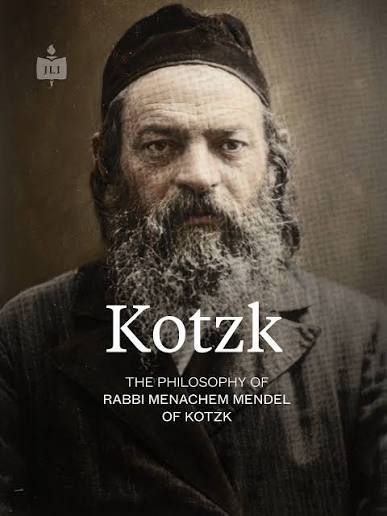
    Rabbi Menachem Mendel of Kotzk (the Kotzker Rebbe, 1787–1859) revolutionized Judaism through his radical, uncompromising pursuit of emes (authenticity/truth) and his fierce war against hypocrisy and self-deception. His genius lay in stripping away comfortable religious complacency, demanding that individuals take personal ownership of their spiritual lives and serve God with their whole, flawed humanity.

    The Core Pillars of Kotzker Torah

    • Radical Authenticity (Vorhayt over abstract Emes): The Kotzker famously shifted the concept of truth from an abstract philosophical ideal to vorhayt—a Yiddish term meaning “realness” or absolute personal genuineness. He taught that a mitzvah performed with even a whiff of self-interest or superficial imitation is a falsification of Judaism.
    • Human Holiness (Kedoshim Tihyu): Disdaining the pursuit of angelic perfection, the Kotzker interpreted verses like Exodus 22:30 (“You shall be holy people to Me”) to mean: “You have to be holy in a human way.” God has plenty of angels; the Torah’s genius is in elevating regular human beings with all their temptations, struggles, and doubts.
    • The Inward Gaze: In a culture obsessed with looking to the heavens or the mystical beyond, the Kotzker redirected focus back to the self. As he famously noted: “People tend to look upwards, contemplating the mysteries of the heavens. They would do well to look inward and examine what’s happening within themselves.”

    Famous Paradoxes and Teachings

    • On God’s Presence: “Where is God? Wherever He is allowed in.” The Kotzker taught that you do not wait passively for a divine revelation; you must actively find God in the mundane, everyday corners of your life.
    • The Broken Heart: “There is nothing more complete than a broken heart.” He valued the raw, honest pain of a person wrestling with their shortcomings over the hollow pride of a person who thinks they have achieved righteousness.
    • On Self-Creation: One of his most famous transmitted encounters features a student who learned that a human is a human, an angel is an angel, and a man can rise higher than an angel. The Kotzker’s ultimate takeaway: God created the beginning (Bereishis); after that, man must create his own world.