
Author: eliyokimcohen

  • Success in War for the Jewish People Only Comes From Hashem Through Our Merit

    Success in War for the Jewish People Only Comes From Hashem Through Our Merit

    The concept that ultimate victory and protection for the Jewish people stem directly from Divine Providence (Hashem), Torah, and living a Jewish life is a foundational principle in Jewish thought. This idea is understood through several core perspectives in Judaism:

    Divine Intervention (Siyata D’Shamaya): The Torah explicitly states that when the Jewish people go to war, it is Hashem who ultimately delivers the enemy into their hands. The awareness that Hashem is the ultimate combatant emphasizes that victory requires deep faith, spiritual purity, and trust.

    The Spiritual Front: Throughout Jewish history, the spiritual efforts of the people have been seen as just as critical as the physical battlefield. Torah study and fervent prayer (tefillah) are considered forms of “sacred ammunition” and protection.

    The Rambam’s Perspective: While acknowledging that the Jewish people have faced historical defeats, the Rambam interprets the command to go to war as an active mandate to eliminate fear and place complete faith in God, transforming the battlefield into an opportunity for Kiddush Hashem (sanctifying God’s Name).

    Physical and Spiritual Partnership: While Hashem grants the ultimate victory, Judaism teaches that humanity is Hashem’s partner in creation. Therefore, engaging in necessary self-defense and taking practical action (hishtadlus) is also required.


  • 10 Incredible Stories of Hasgachah Pratis (Divine Providence) That Will Make Your Soul Fly

    10 Incredible Stories of Hasgachah Pratis (Divine Providence) That Will Make Your Soul Fly

    Hashgacha Pratis (Hebrew: השגחה פרטית) translates to “Divine Providence”. In Jewish theology, it is the fundamental belief that G-d is intimately involved in the daily lives of individuals, continuously directing and guiding even the smallest details of the universe.

    The Core Concept

    While Hashgacha Kelalit (general providence) refers to G-d maintaining the overarching laws of nature, Hashgacha Pratis signifies His specific, focused attention on every individual creature and event. According to Judaism, nothing happens by pure coincidence; every blade of grass that sways or challenge you face is part of a deliberate, Divine design.

    Differing Philosophical Views

    While all mainstream Jewish scholars agree that G-d exercises Divine Providence, the extent of its detail has been a subject of deep debate:

    • Rambam (Maimonides): Taught that Hashgachah Pratis applies primarily to humans. Because humans possess intellect and free will, G-d’s detailed supervision corresponds directly to an individual’s spiritual and intellectual connection with the Divine. He posited that non-human elements of the natural world are governed by general laws.
    • Ramban (Nachmanides): Argued that G-d’s detailed providence encompasses all of creation. Every occurrence is a result of specific Divine decree rather than just the “laws of nature.”
    • The Baal Shem Tov (Founder of Chassidism): Expanded the concept significantly. He taught that Hashgachah Pratis extends not just to humanity, but to every leaf that falls or creature that moves. He emphasized that even the seemingly mundane things a person sees or hears serve as a personal directive or lesson from G-d.

    Free Will and Providence

    A central challenge in Jewish philosophy is balancing Hashgacha Pratis with human free will. If God dictates every detail of our lives, how are we responsible for our choices?

    Classical thinkers (like Rambam) resolve this by asserting that while G-d knows the future and directs the world, He leaves human moral choices entirely in the hands of the individual. Our circumstances, environment, and opportunities are orchestrated by God, but our reaction and moral decisions remain fully within our own power.

    Purpose and Impact

    Embracing this concept is a core pillar of Bitachon (trust in God). It provides followers of Judaism with profound comfort and meaning, assuring them that every hardship, triumph, and encounter is purposeful and divinely orchestrated for personal growth and spiritual refinement

  • 7 Torah Gems That Will Illuminate Your Soul and Change Your Life

    7 Torah Gems That Will Illuminate Your Soul and Change Your Life

    Today’s episode is a potpourri of Torah topics, and we are going to delve into some of the most beautiful and holy aspects of Judaism in this lecture.

    Why we take 3 steps back during davening (prayer)

    The power of the number 516

    The merit of our beloved mother Rochel

    The chasm between the numbers 100 and 101

    How nothing is worse in life than being ungrateful

    The only 4 day periods in the Torah

    The very specific reason why Hashem loved Avraham

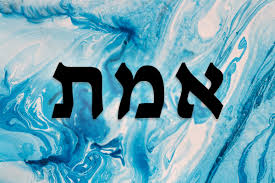
  • The Seal of G-d is Emes (Truth) – That is How Important Being Honest is in this World

    The Seal of G-d is Emes (Truth) – That is How Important Being Honest is in this World

    In Jewish tradition, it is taught that “the seal of Hashem (God) is Emes (Truth)”. This profound concept links the Creator directly to absolute, unchanging truth.The Signature of Truth

    The Source: The Talmud (Shabbos 55a) explicitly states that God’s seal, or signature, is Emes (אמת), which translates to Truth. (Aleph, Mem, Tav): The word Emes is constructed from the first letter, the middle letter, and the final letter of the Hebrew alphabet (Aleph, Mem, and Tav). This represents a truth that encompasses the beginning, middle, and end, signifying an eternal, unchanging reality.

    The Torah Connection: The Torah is referred to as Toras Emes (The Torah of Truth) because it is the ultimate expression of Hashem’s wisdom and truth.

    Emes in Judaism: In Judaism, Emes goes far beyond simply “telling the truth”—it is about aligning with ultimate reality. Because G-d is the only truly unchanging Being, pursuing and living a life of integrity, honesty, and alignment with the Torah means you are continually connecting with the essence of Hashem

    The Seal of G-d: A famous teaching from the Talmud (Shabbos 55a) states that God’s signature or seal is Emes (truth). Just as an ancient king’s seal guaranteed authenticity, truth is the stamp of Divine creation.

    Complete Consistency: In the physical world, things change, decay, and end. Hashem (G-d) is the only unchanging, constant reality.

  • The Mysteries of the End of Times According to the Tanach

    The Mysteries of the End of Times According to the Tanach

    Traditional Jewish eschatology, drawing on the Tanach and the Talmud, teaches that the end of days involves a final, cataclysmic struggle between the descendants of Abraham—focusing on the spiritual forces of Israel, Eisav (Esau / Rome / the Western world), and Yishmael (Ishmael / the Arab world).

    The Role of Eisav: In Jewish tradition, Eisav represents Edom, symbolizing Western civilization, Rome, and materialism. The Talmud (Yoma 10a) and prophetic writings discuss a final exile and struggle under the dominion of Edom.

    The Role of Yishmael: Yishmael represents the Arab nations and early Islamic empires. In the end times, Yishmael is prophesied to hold sway and challenge the Jewish people, often forcing them to deeply evaluate their connection to the Land of Israel.

    The wars and tribulations of Eisav and Yishmael are seen as the final purifications of the world. The era ends not with destruction, but with universal peace, where all humanity abandons war and recognizes the One G-d, as prophesied in Yeshayahu (Isaiah) and Zecharia (Zechariah).

  • My Personal Story – Cocaine to Amen

    My Personal Story – Cocaine to Amen

    Fueled by cocaine, I was involved in a 45-minute high-speed car chase with dozens of police cars in pursuit. It was then I realized the life I was living was going nowhere and desperately needed to change. That change came through embracing my Jewish roots and a determination to learn and live by the Torah, so dear to us as Jews.

    This is a fascinating story of personal redemption and growth, capable of inspiring anyone who reads it. My goal is to awaken my fellow Jews from the spiritual darkness engulfing so many, and for this story to serve as a guiding light toward a rebirth of values, morals, and ideology.

    Here is my story: Cocaine to Amen!

  • The Mind Blowing Book of Daniel and What it Foreshadows in the End of Times

    The Mind Blowing Book of Daniel and What it Foreshadows in the End of Times

    Perhaps the most fascinating of all the prophetic books of the Tanach, we delve inside the Book of Daniel and reveal some of the most astounding prophecies detailing what the world will look like in the End of Times!

    In Judaism, the Book of Daniel is a profound text of hope and resilience. It explores how the righteous maintain their faith while in exile, and decodes the ultimate end of worldly empires. The book’s mysteries span two distinct halves: epic court tales and deep apocalyptic visions.

    Daniel deciphers King Nebuchadnezzar’s dream of a massive statue with a head of gold, chest of silver, thighs of bronze, and feet of iron mixed with clay. This represents the successive rise and fall of world empires, which will ultimately be crushed by a divine rock.

    This video is absolutely fascinating!

  • The Life Saving Importance of Tzedakah – How Giving Charity is Your Best Weapon in Life

    The Life Saving Importance of Tzedakah – How Giving Charity is Your Best Weapon in Life

    On today’s incredible powerful episode we discuss tzedakah, perhaps the hallmark of the Jewish people. “Charity” commonly means alms, gratuitous benefactions for the poor. The giver of charity is a benevolent person, giving when he need not. He does not owe the poor anything, but gives because of his generosity.

    Tzedakah” has a completely opposite meaning. Instead of connoting benevolence, it is the idea of justice — that it is only right and just that one gives tzedakah. There are two reasons for this:

    (i) A person is obligated to give to another, for the money is not his own. G‑d has given the money to him on trust, for the purpose of giving it to others.

    (ii) G‑d is not beholden to man, yet gives him what he needs. A Jew must act in the same way, indeed is obligated to: he must give to others although not beholden to them. In return, G‑d rewards him in like manner. Because he has transcended his natural instinct and given when not beholden, G‑d in turn grants him more than he is otherwise worthy of receiving.