Author: eliyokimcohen

  • THE CLOTHES MAKE THE MAN – The Intrinsic Importance of Clothing in Judaism

    THE CLOTHES MAKE THE MAN – The Intrinsic Importance of Clothing in Judaism

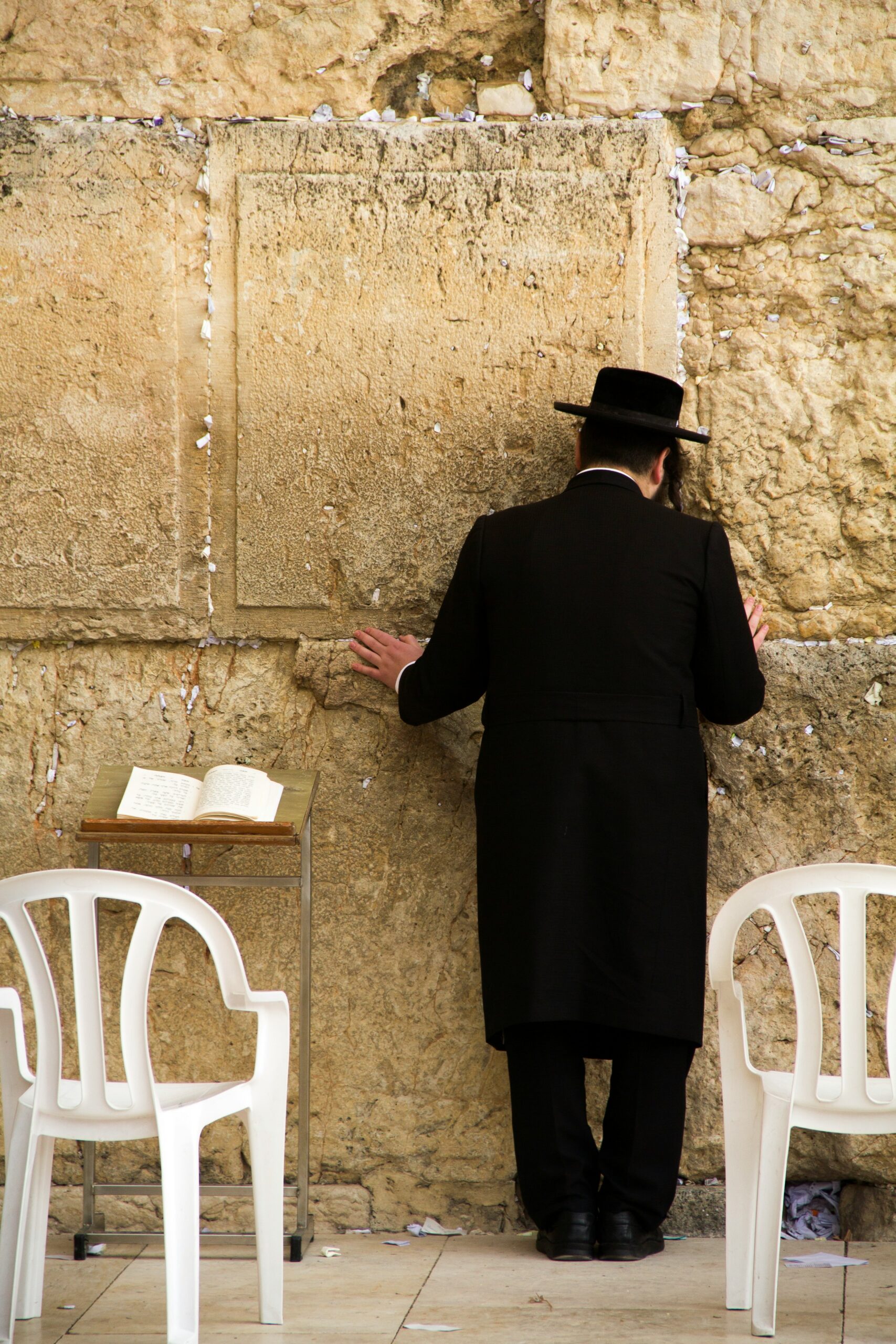
    In Judaism, clothing is viewed as a profoundly spiritual tool rather than just physical protection. The Torah establishes that garments are meant to elevate human dignity (kavod), cultivate a sense of holiness (tiferes), and shape one’s inner consciousness, reflecting the idea that what we wear directly impacts how we act.

    The significance of clothing in the Torah encompasses a variety of core concepts:

    • Enclothed Cognition (Shaping Identity): The Torah posits that clothing actively forms identity and behavior. A striking example is the High Priest, who only possesses his sacred status while wearing the exact priestly garments. Wearing specific, symbolic attire—such as a kippah (head covering) or tzitzit (fringed garments)—is viewed as a physical commitment to moral values and a tool to focus one’s mindset.
    • Reflecting the Divine Image: Humans are the only creations that require clothing, which serves to cover the physical body to emphasize the divine soul hidden within. Modesty (tzniut) is practiced to shift focus away from superficial flesh toward intellect and spirit.
    • Separating Man from Beast: When God clothes Adam and Eve (Genesis 3:21), it establishes a fundamental principle of human civilization. Dressing distinguishes human beings from animals and symbolizes moral refinement.
    • Elevating the Mundane: During sacred times, Jews are commanded to dress up. Wearing distinct, beautiful clothing on Shabbat and festivals turns those days into something holy and separate from the rest of the week. The white kittel (robe) worn on Yom Kippur serves to heighten purity and humility.
    • Honoring and Beautifying: The Torah details the intricate, vibrant garments of the priests to establish that beauty and honor are essential components of serving the Divine.

  • CHANGE YOUR LIFE: Jealousy, Lust and Honor Remove One from the World

    CHANGE YOUR LIFE: Jealousy, Lust and Honor Remove One from the World

    Rabbi Elazar HaKappar stated in Pirkei Avos 4:21 that “Jealousy, lust, and the [pursuit of] honor remove a person from the world”. Because these three traits compel a person to constantly look outward at others rather than inward at their own blessings, they effectively destroy one’s ability to live an authentic life in the present.

    While all three are destructive, if you have to remove one to change your life, removing Jealousy is the most highly recommended starting point by psychologists and philosophers alike.

    Here is why tackling jealousy first is so transformative, along with insights into the other two:

    1. Why Remove Jealousy? (The Theft of Presence)

    Jealousy fundamentally distracts you from your own purpose. When you focus on what others have, you rob yourself of joy in your own journey.

    • The Antidote: Ben Zoma offers a powerful tool in Pirkei Avos 4:1: “Who is rich? He who is satisfied with his lot.”
    • Actionable step: Each time you feel a pang of envy over someone else’s success, write down three things you are genuinely grateful for in your own life to reset your focus.

    2. Lust (The Trap of the Ego)

    Lust is not just romantic; it represents a relentless craving for physical desires, wealth, and material possessions. It removes you from the world because it creates an endless cycle of wanting more and never being satiated.

    • Actionable step: Practice moderation. Set firm boundaries on your time and money so that momentary impulses don’t derail your broader, long-term goals.

    3. Honor (The Illusion of External Validation)

    The pursuit of honor drives a person to prioritize how they are perceived by others above their own moral truth. It often leads to resentment and even hatred when others receive the recognition you feel you deserve.

    • Actionable step: Learn to separate your self-worth from what others think. Focus instead on doing the right thing for its own sake, and let the honor come naturally without chasing it.

  • The Importance of Always Speaking the Truth…It is the Seal of Hashem

    The Importance of Always Speaking the Truth…It is the Seal of Hashem

    In Judaism, Emes (אֱמֶת, Truth) transcends mere factual accuracy, embodying absolute reliability, divine wholeness, and the foundation of creation. The Torah itself is often referred to as Torat Emet (Torah of Truth) because its teachings reflect God’s ultimate reality and provide the ethical blueprint for a faithful life.

    The profound importance of Emes in Jewish thought is explored across several core dimensions:

    1. The Seal of the Divine

    • Consistent from Beginning to End: The Jerusalem Talmud observes that the Hebrew word Emes is uniquely spelled with the first (Alef), middle (Mem), and final (Tav) letters of the Hebrew alphabet. This symbolizes that true wisdom must be enduring and consistent from its inception to its conclusion, without compromise.
    • The Signature of God: The Talmud teaches that “the seal of God is truth.” Since the Divine soul breathed into humanity originates from a realm of pure truth, acting truthfully aligns an individual with God’s presence, whereas falsehood creates internal and spiritual dissonance.

    2. The Link Between Truth and Trust

    • Shared Roots: In Hebrew, Emes (truth) shares its root letters with Emunah (faith/belief) and Amen (trust).
    • Reliability and Faith: A fundamental tenet of Judaism is the continuous, unbreakable chain of trust, extending from Moses at Mount Sinai through generations of teachers and parents. Therefore, Emes mandates that a person strive to be dependable, trustworthy, and true to their word in both public and private life.

    3. Truth within the Heart

    • Internal Integrity: Judaism emphasizes doveir emes bilvavo—speaking the truth in one’s heart. This requires self-honesty, complete transparency, and actively aligning internal motives with external actions.

    4. The Balance Between Truth and Peace

    • Shalom over Absolute Truth: While Emes is paramount, Jewish tradition acknowledges the complexities of human relationships. The Talmud explicitly states that although the world rests upon both truth and peace, when these values conflict, the pursuit of peace (Shalom) often takes precedence. Consequently, “white lies” or minor omissions are permitted, and sometimes even encouraged, if they prevent senseless conflict, preserve harmony, or protect human dignity.
  • What Should be Your Hashkafa (World Outlook) in Life to Align With G-d

    What Should be Your Hashkafa (World Outlook) in Life to Align With G-d

    In Judaism, Hashkafa (Hebrew for “worldview” or “philosophy”) refers to the guiding ideals and principles that shape an individual’s faith and lifestyle. It operates in conjunction with Torah and Halakha (Jewish law), providing the spiritual and conceptual framework for rituals and commandments.

    The Significance of Hashkafa in Judaism

    While Halakha delineates specific actions, Hashkafa addresses the underlying rationale. Its importance is underscored by the following points:

    • Informs Religious Practice: Hashkafa provides essential context for mitzvot (commandments). Rather than merely performing actions mechanistically, an understanding of Hashkafa enables individuals to connect with the deeper spiritual purpose of their observances.
    • Establishes Moral Orientation: It contributes to the development of a cohesive ethical framework. When confronted with complex life decisions, a well-defined Torah Hashkafa offers clarity, direction, and purpose.
    • Shapes Life Perspectives: Hashkafa influences an individual’s approach to broader concepts such as family relationships, community engagement, resilience in the face of adversity, and interaction with the modern world.
    • Context for Practice: Without proper hashkafa, performing mitzvot can become an empty, mechanical habit. Your worldview injects “soul” and purpose into your daily actions.
    • Life Compass: It serves as an internal guide, helping you navigate moral dilemmas, relationships, and major life decisions by holding them up against Torah values.
    • Connection to God: It determines how you relate to the Divine—whether you see God as distant and strict, or as an immanent, ever-present force in your daily life.

    The Elements of “Proper” Hashkafa

    What makes an outlook proper and authentically Jewish? In Judaism, a correct worldview:

    • Rooted in Torah Sources: Proper hashkafa cannot just be modern or secular philosophy. It must be derived directly from classic Torah texts, Chazal (the Sages), and the great commentaries.
    • Focuses on Sanctity: While basic morality can exist without the Torah, a proper Torah hashkafa aims for Kedusha (holiness), elevating everyday physical existence into something spiritual.
    • Requires Proper Guidance: Because it is easy to misinterpret texts or be influenced by the surrounding culture, proper hashkafa requires learning with a trusted, learned Rabbi to ensure your views align with Jewish tradition.
  • Anger is Regarded as One of the Most Destructive Forces a Person Can Experience

    Anger is Regarded as One of the Most Destructive Forces a Person Can Experience

    In Judaism, anger (ka’as) is widely considered one of the most debilitating and spiritually destructive character traits (middos). The Torah and sages warn that yielding to rage completely eclipses wisdom, shatters relationships, and drives a person to act against their own core values.

    Why Anger Is Debilitating

    • Loss of Wisdom: The Talmud teaches that anger causes a person’s wisdom and intellect to depart, leading to regrettable, instinct-driven actions.
    • Equivalent to Idolatry: Maimonides rules that anger is akin to idol worship, as it implies a rejection of Divine Providence and a desire to control outcomes.
    • The Cost of Outbursts: Even great leaders like Moses faced severe consequences for anger; his striking the rock denied him entry into the Promised Land.

    How to Overcome It

    • Recognize Hashem’s Control: Jewish teachings emphasize that acknowledging God’s hand in all events is the ultimate antidote to anger, viewing those who wrong us as mere “messengers.”
    • Pause and Reflect: As exemplified by Hillel, taking a moment to cool down allows wisdom and perspective to return, helping maintain composure.
    • Focus on Compassion: Judaism mandates apologizing and seeking forgiveness to heal interpersonal ruptures, rather than harboring grudges.
  • Modesty is the #1 Attribute for Women, it’s the Main Factor in Her Heavenly Judgement

    Modesty is the #1 Attribute for Women, it’s the Main Factor in Her Heavenly Judgement

    Overlay Header

    Makes the header transparent and positions it over the page content. Best used with hero sections that have a background image or color.

    There is a famous commentary by the Vilna Gaon emphasizing that modesty (Tznius) is the most critical mitzvah (commandment) for a woman, which heavily impacts her soul’s evaluation.

    “The daughter of the king is all dignified within; her clothing is of embroidered gold.” (Pslams 45:14)

    In traditional commentaries, this verse illustrates the ultimate Jewish ideal of modesty:

    “All dignified within”: The primary focus of a woman’s true worth is her internal holiness, intellect, and character, rather than outward physical display.

    “Clothing is of embroidered gold”: This represents her external deeds and adherence to Jewish law, which are precious, refined, and beautiful, but secondary to her internal spirit.

    Modesty (Tznius) In Practice

    Beyond Clothing: Tznius is not just a dress code; it includes quiet speech, humility, and maintaining a dignified space in all aspects of life.

    Guidelines: Traditional applications often involve wearing apparel that does not draw undue attention, generally covering the collarbone, elbows, and knees. Married women also traditionally cover their hair.

    A Shared Responsibility: Judaism teaches that modesty requires action from both genders. While women are expected to dress with dignity, men are equally commanded to guard their eyes, thoughts, and action.

  • Kiddush Hashem & Chillul Hashem – What Makes These Two Aspects of Judaism so Critical

    Kiddush Hashem & Chillul Hashem – What Makes These Two Aspects of Judaism so Critical

    In Judaism, Kiddush Hashem (sanctification of God’s name) and Chillul Hashem (desecration of God’s name) are foundational mitzvot (commandments) dictating that a Jew’s public behavior, ethics, and choices reflect directly upon the Creator, the Torah, and the Jewish people.

    Both concepts are derived from the Torah portion of Emor in Leviticus:

    The Commandment: “You shall not profane My holy name, that I may be sanctified among the Israelite people” (Leviticus 22:32). Kiddush Hashem (Sanctifying God’s Name)

    Everyday Actions: Acting with extreme integrity, honesty, and kindness so that others observe your behavior and say, “How beautiful must be the God and the Torah that inspired this person”.

    Ultimate Sacrifice: Historically, it represents being willing to make the ultimate sacrifice of life itself rather than transgressing the three cardinal sins: idolatry, murder, and forbidden sexual relations.

    Spiritual Priority: It is the active choice to make your relationship with God the focal point of your life, letting it guide your decisions and interactions.

    Chillul Hashem (Desecrating God’s Name)

    Ethical Lapses: Committing unethical or immoral acts—especially for individuals who are seen as learned or representing the community. The Talmud (Yoma 86a) suggests that something as seemingly minor as failing to pay a merchant on time can cause a Chillul Hashem.

    Spiteful Sins: Willfully violating a Torah law out of spite or arrogance (rather than yielding to natural temptation), thereby making a mockery of God’s laws.

    Severity: In Judaism, Chillul Hashem is considered a profound spiritual offense. The sages explain that it is so serious that true atonement requires sincere repentance, the Day of Yom Kippur, personal suffering, and even death to completely wipe the slate clean.

  • Nothing is More Important in Judaism Than Modesty – It Goes Far Beyond How we Dress

    Nothing is More Important in Judaism Than Modesty – It Goes Far Beyond How we Dress

    The two largest misconceptions about tzniyus are (1) that it’s just about clothing and (2) that it’s just for girls. Each of these is wholly inaccurate. Yes, how much skin a person displays is an aspect of modesty, but there’s so much more to it than that. How we act, how we talk, and how we treat others are all a part of tzniyus, which doesn’t mean to be “modest” so much as to act with propriety and dignity.

    Modesty, known in Hebrew as Tznius, is a deeply cherished value in Judaism, though the tradition does not categorize it as the single most important concept. Instead, Judaism places the ultimate emphasis on performing mitzvot (commandments), pursuing justice, and treating others with respect.

    If you’re interested in how tznius functions within Judaism, here is how the tradition approaches it:

    • Beyond Clothing: While popular culture often associates it primarily with dress, tznius actually encompasses behavior, speech, and attitude. It promotes dignity, humility, and privacy.
    • For Men and Women: Modesty applies to both men and women. Both are expected to avoid boasting, avoid drawing undue attention to themselves, and behave with respect toward others.
    • The Deeper Meaning: Many Jewish scholars describe tznius not about hiding, but about guarding what is deeply valuable. By focusing less on external flashiness, the goal is to emphasize the inner character and soul.
  • We Keep Our Arch Enemies Yishmael and Eisav Apart is Through Observance ofShabbos

    We Keep Our Arch Enemies Yishmael and Eisav Apart is Through Observance ofShabbos

    In Jewish tradition, the Friday night Kiddush serves as a spiritual mechanism to separate and elevate the Jewish people from the 70 nations of the world, represented historically by the archetypal sibling rivalries of Esau (Edom) and Ishmael.

    The Torah commands: “You shall not plow with an ox and a donkey together” (Deuteronomy 22:10). In Jewish mysticism (the Zohar), this law is a warning about global history. It indicates that if the spiritual forces of Eisav and Yishmael were to unite or “plow together,” their combined power could destroy the entire world

    Eisav (Shor / Ox): Symbolizes brute strength, worldly power, and the pursuit of domination. However, the Ox also has a holy dimension, representing Moshiach ben Yosef (the Messiah connected to physical labor, building, and Jewish survival).

    Yishmael (Chamor / Donkey): Symbolizes raw materialism, unbridled desires, and the stubborn resistance to spiritual restraint. Despite this, the Chamor also possesses a holy side, representing Moshiach ben Dovid (who famously rides into Jerusalem on a donkey, signifying humility).

    The connection between these concepts is deeply rooted in Kabbalah and Jewish philosophy:

    • The Symbolism of Wine: The numerical value (gematria) of the Hebrew word for wine (yayin) is 70, which parallels the 70 nations. Reciting the blessing over wine elevates the number 70 into a state of holiness.
    • The 70 Words of Kiddush: Mystical texts like the Zohar point out that the Friday night Kiddush often corresponds in word count to the 70 root nations. By reciting it, the Jewish people symbolically bind and elevate these earthly forces of the world into the realm of the sacred.
    • Separating Esau and Ishmael: Because Shabbos is inherently a day of peace and divine harmony, it acts as a metaphysical boundary that keeps the chaotic, external hostilities of the “70 nations”—often personified in Rabbinic literature by Esau (who stands for Rome/Western civilization) and Ishmael (the Islamic world)—from destroying the Jewish people
  • 7 Wondrous Gems from Pirkei Avos That Will Elevate Your Soul and Touch Your Heart

    7 Wondrous Gems from Pirkei Avos That Will Elevate Your Soul and Touch Your Heart

    Pirkei Avos (Ethics of the Fathers) is the foundational ethical and spiritual backbone of Judaism. Unlike the rest of the Mishnah, which focuses on strict legal codes, this tractate contains the personal maxims, virtues, and spiritual insights of over 60 sages. It outlines how to live a meaningful life.

    The Core Spiritual Framework

    Character Development: It establishes the concept that derech eretz kadma leTorah—proper etiquette and ethical character must precede Torah study. The teachings ask not just what to do, but what kind of person to become.

    The Transmission of Tradition: The very first passage maps the unbroken chain of the Oral Torah from Moses at Mount Sinai through the prophets and early sages.

    Pillars of the World: One of its most famous maxims teaches that the world is sustained by three things: Torah study, the service of God (prayer), and acts of loving-kindness. Spiritual Teachings: It dives deeply into the human condition, free will, humility, and the importance of community, offering practical wisdom for daily life.

    Pirkei Avos is studied by Jews of all backgrounds to build a moral universe. For nearly two millennia, it has been the custom to study one of its chapters every Shabbat afternoon during the spring and summer months (between Passover and Shavuos or Rosh Hashanah). This period serves as spiritual preparation for the ongoing reception of the Torah