Author: eliyokimcohen

  • HEARTBREAKING: The Downfall of Reuven and His Tribe is a Cautionary Tale for the Jewish People

    HEARTBREAKING: The Downfall of Reuven and His Tribe is a Cautionary Tale for the Jewish People

    Reuven lost his bechorah (firstborn birthright) to Yosef and kingship to Yehudah because he interfered with Yaakov’s sleeping arrangements after Rachel’s death. While the literal text implies he lay with Yaakov’s concubine Bilhah, the Talmud (⁠Shabbat 55b) states he merely rearranged the beds to defend his mother Leah’s honor.

    Reuven, you are my firstborn, my power and the beginning of my strength… Unstable as water, you shall not excel; because you ascended your father’s bed; then you profaned [it]…” – In Bereshit 49:3–4, Yaakov addresses his eldest son directly:

    The Biblical Account

    The Event: According to ⁠Genesis 35:22, Reuven went and lay with Bilhah, his father’s concubine, and Yisrael heard.

    The Repercussions: 1 Chronicles 5:1 explicitly states that because Reuven defiled his father’s couch, his birthright was transferred to the sons of Yosef.

    Two Main Traditional Perspectives

    The Literal View (e.g., Radak, Ramban): Reuven literally committed an act of severe impropriety with Bilhah and was punished by losing the privileges of the firstborn.

    The Midrashic/Allegorical View (e.g., Rashi, Shabbat 55b): Reuven did not commit a physical sin. Instead, when Yaakov moved his bed into Bilhah’s tent after Rachel died, Reuven felt it was an insult to Leah. He stepped out of bounds by moving the bed to Leah’s tent. The Torah treats this disrespectful intrusion as gravely as if he had slept with her.

    Redistribution of the Firstborn Rights

    The loss of the bechorah did not strip Reuven of his lineage, but it divided his privileges among his brothers:

    Double Portion: Transferred to Yosef (whose sons Ephraim and Menashe became two separate tribes).

    Kehunah (Priesthood): Given to Levi.

    Malchut (Kingship): Given to Yehudah.

    Key Outcomes for Reuven’s Descendants

    Loss of Preeminence: Reuven’s tribe did not ascend to tribal or national leadership. The tribe produced no notable judges, kings, or prophets.

    Geographical Settlement: The tribe chose to settle east of the Jordan River (in the lands of Gilead and Jazer) rather than crossing over into the Promised Land of Canaan with the rest of the tribes.

    Vulnerability: Because they were geographically separated and easternmost, the tribe of Reuven was among the first to be conquered and exiled by foreign empires (the Assyrians), leading to their status as one of the Ten Lost Tribes of Israel.

  • The Greatest Mitzvah of them All – The Eternal Reward for those who Support Torah

    The Greatest Mitzvah of them All – The Eternal Reward for those who Support Torah

    Supporting Torah learning is considered one of the highest forms of Tzedakah (righteous giving). In Judaism, elevating Torah study sustains the spiritual core of the community. Sages teach that dedicating resources to enable others to study connects the giver directly to the timeless wisdom and continuity of the Jewish people.

    Being a supporter of Torah learning through tzedakah (righteous giving) is considered a fundamental pillar of Judaism. It acts as a partnership where donors enable scholars to study and preserve Jewish wisdom, ensuring the continuity of community values and spiritual sustenance for future generations.

    The Core Concepts

    Torah Learning (Talmud Torah): Seen as the lifeblood of the Jewish people. According to tradition, the study of Torah is equivalent to all other commandments combined, as it continuously connects the community to divine wisdom and informs ethical action.

    Tzedakah: Far more than the English concept of “charity,” tzedakah translates to “justice” or “righteousness”. Giving to support Jewish education is not viewed as an optional act of generosity, but as an obligation to restore equity and maintain the infrastructure of Jewish life.

    Why Supporting Torah Learning Matters

    Sustaining the World: Sages teach that the ongoing study of the Torah is what maintains the existence and stability of the universe.

    Ensuring Communal Continuity: Funding Jewish education—from local day schools and adult education classes to advanced academies (kollels)—trains the future rabbis, teachers, and leaders who will guide and service the community.

    Partnership in Mitzvot: When an individual financially supports someone who is learning Torah, Jewish tradition considers the donor a full partner in the scholar’s learning and spiritual merits.

    The Yissachar-Zevulun partnership is a time-honored Jewish concept where a merchant (Zevulun) financially supports a full-time Torah scholar (Yissachar). In return for this physical and financial support, Zevulun receives an equal share of Yissachar’s spiritual rewards in the World to Come, creating a mutual, binding partnership.

    Origins and Biblical Context

    The concept originates from the Torah, specifically Jacob’s blessings to his twelve sons and Moses’s blessings to the tribes of Israel.

    Yissachar: Represented the tribe of scholars who dedicated their lives to studying and teaching the Torah.

    Zevulun: Represented the tribe of seafarers and merchants who engaged in lucrative commerce and trade.
    Historically, they formed a mutual supply chain and economic pact, which evolved into the spiritual arrangement we know today.

    How the Arrangement Works

    In Jewish law (Halacha), this is considered a shutfus mamish (a true partnership) rather than mere charity (Tzedakah).

    The Obligation: Zevulun provides the necessary financial means to relieve Yissachar of the burden of working, allowing him to study Torah undisturbed.

    The Reward: In exchange, Zevulun earns an equal share of the Heavenly reward for the Torah studied during the term of their agreement.

    Prior Agreement: The agreement must be made in advance. A businessman cannot retroactively purchase the merit of a scholar’s past Torah study.

  • Two Worlds – The Original World Hashem Created is not the World we Live in Today

    Two Worlds – The Original World Hashem Created is not the World we Live in Today

    In Genesis 1, God is referred to exclusively as Elohim (אֱלֹהִים), the name denoting justice and universal power. The personal, four-letter divine name (Hashem) first appears in Genesis 2:4 combined as Elohim.

    The shift between these names in Torah tradition represents distinct aspects of the Divine:

    The Shift in Names

    • Genesis 1 (Elohim): The text utilizes Elohim to depict God as the transcendent Creator of the macro-universe. In Jewish tradition, Elohim is the name of strict justice, law, and the natural order.
    • Genesis 2 (Hashem / YHWH Elohim): The text shifts to YHWH Elohim (translated as “LORD God”) when God interacts intimately with humanity on a micro-level (forming man from dust, breathing life, and planting a garden). YHWH represents mercy, compassion, and a personal, covenantal relationship.

    How Scholars and Rabbis View the Shift

    • Classical Rabbinic View (Rashi, Nachmanides): Sages explain that the single author (Moses) purposely used different names to reveal different attributes. Elohim denotes God’s attribute of strict justice (middat ha-din), while the Tetragrammaton denotes His attribute of mercy (middat ha-rachamim.

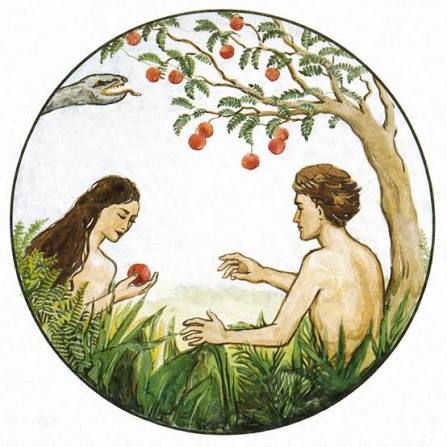
    In classical Jewish Midrashic and mystical literature, creation fell because the earth, trees, and animals rebelled against God’s primordial design, acting as co-conspirators in the cosmic breakdown alongside Adam and Eve.

    1. The Trees and the Earth Sinned

    According to the Midrash (Genesis Rabbah 5:9), God originally commanded the earth to create fruit-bearing trees where the bark and wood tasted exactly like the fruit.

    • The Transgression: When the earth brought forth the trees, the trees themselves disobeyed. The wood tasted like wood, while only the fruit was sweet.
    • The Consequence: Because the earth and the trees failed to follow God’s explicit instruction to make the tree itself an edible delicacy, God cursed the earth and the ground upon Adam’s fall.

    2. The Bushes (Vegetation)

    In the literal timeline of the Garden of Eden, after eating the forbidden fruit, Adam and Eve realized their nakedness and attempted to hide behind the bushes. Mystical and Midrashic commentaries treat the vegetation of the garden as having “aided and abetted” the transgression by becoming material covers for human shame, solidifying the rupture between humanity’s spiritual state and the physical world.

    3. The Animals Sinned

    The animal kingdom’s primary transgression centers on the serpent (nachash), which is described in Genesis 3:1 as the craftiest of all beasts.

    • The Transgression: The serpent not only enticed Eve but also exhibited jealousy toward Adam. In certain Midrashic interpretations, the animals also copulated with or broke boundaries within Eden, while all beasts were ultimately cursed to crawl on their bellies or lose their elevated status because they facilitated the primary human defiance.

    4. Adam Sinned

    Adam’s core sin was not simply eating an apple, but rather severing the connection between the physical world and its divine source. By plucking the fruit without acknowledging where it came from, he introduced mortality, the “evil inclination” (yetzer hara), and a mixture of good and evil into his very soul.

  • 10 Chassidish Rebbe Gems Which Will Change the Way You View Life Forever

    10 Chassidish Rebbe Gems Which Will Change the Way You View Life Forever

    Chassidish Rebbe wisdom centers on revealing the profound, practical spirituality hidden within daily Jewish life. Grounded in the teachings of the Baal Shem Tov and refined by revered leaders like the Seer of Lublin, the Sanzer Rebbe, Reb Zusha and Lubavitcher Rebbe, this philosophy emphasizes relentless optimism, the infinite inherent worth of every individual, and the transformative power of studying Torah.

    Core Themes & Wisdom

    • The Infinite in the Mundane: Hasidism teaches that the divine presence fills all worlds. Every physical action—whether giving charity, speaking kindly, or working—is a sacred opportunity to elevate the material world and connect with the Creator.
    • Ahavas Yisroel (Love for Fellow Jews): Rebbes historically emphasize unconditional love and respect for every Jew, regardless of their background or level of observance. This view actively trains individuals to look past faults and recognize the essential, inner goodness in every person.
    • Action Over Intellect: While deep intellectual study is highly valued, a Rebbe’s wisdom stresses that practical, everyday Mitzvot (commandments) and deeds are the ultimate purpose of Torah study. It is the combination of study with actionable kindness that anchors the soul.

    Daily Inspiration & Practice

    • Study the Torah Portion: Studying the weekly Torah portion provides modern, pragmatic lessons and fresh inspiration to navigate daily life.
    • Positivity Bias: Rebbes emphasize that the soul is pure, and that focusing on innate positivity and joy—rather than dwelling on negativity—unlocks a person’s true potential to serve God and others.
    • Mission-Driven Life: Followers are encouraged to see themselves as vital links in a chain of generations, tasked with bringing spiritual light and practical holiness into the broader community.

    Chassidic rebbes combined encyclopedic Talmudic genius with mystical insight and profound psychological wisdom. Their genius lay not in abstract intellect, but in taking profound spiritual concepts and using them to heal the human condition, elevate the everyday, and empower the individual to transform the world.

  • Gematrias, Codes, Hidden Secrets & Allusions in Torah – Be Prepared to Have Your Mind Blown

    Gematrias, Codes, Hidden Secrets & Allusions in Torah – Be Prepared to Have Your Mind Blown

    Judaism is unique in its theology surrounding the Torah (the Five Books of Moses), asserting that it is the only text in the world literally dictated word-for-word by God (Hashem) to Moses at Mount Sinai. Other world religions revere texts that are considered divinely inspired or revealed through visions and angels.

    The Torah’s Hebrew text contains no separate numerical digits; every letter doubles as a number. Through systems like Gematria, equidistant letter skipping (Torah codes), and cipher substitutions (e.g., Atbash), mystics and scholars uncover mathematical constants, hidden historical allusions, and profound conceptual connections encrypted directly into the scripture.

    1. Gematria: The Mathematics of Meaning

    In Jewish tradition, specifically within Kabbalah, numerical equivalence implies a deep internal connection between two concepts. If two words sum to the same number, their creative forces are fundamentally linked.

    The Power of Unity and Love: The Hebrew word for “one” (Echad – אחד) and the word for “love” (Ahava – אהבה) both equal 13 (1+8+4 = 13 and 1+5+2+5 = 13). The mystical implication is that love and absolute unity are the exact same spiritual energy.

    Jacob’s Ladder: The word for the ladder/ramp in Jacob’s dream (Sulam – סֻלָּם) equals 130 (60+30+40). The word for Mount Sinai (Sinai – סיני) also equals 130 (60+10+50+10). The hidden connection reveals that the ladder represents the bridge between heaven and earth manifested at Sinai.

    The Commandment Code: The fringes worn on Jewish garments (Tzitzit – ציצית) sum to 600. Combined with the 8 strings and 5 knots, it perfectly equals 613, the total number of commandments in the Torah.

    1. Torah Codes (Equidistant Letter Sequences)

    Torah Codes suggest that meaningful words, names, and historical events are spelled out by skipping a specific, constant number of letters throughout the text.

    The Genesis Phenomenon: In the opening verses of Genesis, taking every 50th letter starting from the first appearance of the letter Tav (ת), you spell out the word Torah (תורה). This same phenomenon repeats in the books of Exodus, Leviticus, and Numbers.

    Historical Alignments: Researchers and computer scientists have analyzed instances where terms like “Holocaust,” “Nero,” or specific modern figures appear in statistically improbable clusters near relevant historical context.

    1. Ciphers and Allusions (Remez)

    Beyond standard Gematria, the Torah utilizes complex letter substitutions to conceal messages or speak of taboo subjects without explicitly stating them.

    Atbash Cipher: In this system, the first letter of the alphabet ((\aleph )) is swapped with the last (Ω), the second ((\beth )) with the second to last (\שין), etc.. The book of Jeremiah uses Atbash to refer to the Babylonian empire by the encrypted name Sheshach (ששך), which translates to Babel (בבל) through the cipher.

    Mathematical Constants: Advanced analysis of the opening verse (Genesis 1:1) demonstrates encoded values approximating fundamental mathematical constants like π ≈ 3.14159 and e ≈ 2.718 embedded within the structural ratios of its Hebrew letters.

  • WHO IS RICH – Perhaps the Most Famous Teaching in Pirkei Avos Analzyed Beautifully

    WHO IS RICH – Perhaps the Most Famous Teaching in Pirkei Avos Analzyed Beautifully

    In Pirkei Avos (Ethics of the Fathers), Chapter 4, the sage Ben Zoma defines wealth by stating: “Who is rich? He who is satisfied with his portion”. This teaching redefines riches as inner contentment and gratitude for what one has, rather than the accumulation of material possessions.

    The Context in Jewish Tradition

    The Source: Pirkei Avos is a central tractate of the Talmud’s Mishna that focuses entirely on ethical and moral principles rather than legal rulings.

    Ben Zoma’s Four Questions: The famous teaching on wealth is part of a famous sequence where Ben Zoma challenges society’s definitions of success, stating four core questions:

    Who is wise? One who learns from every person.

    Who is strong? One who conquers his personal inclinations.

    Who is rich? One who rejoices in his designated portion in life.

    Who is honorable? One who honors others

    The quote “Who is rich? He who rejoices in his lot” comes from the Jewish sage Ben Zoma in Pirkei Avot 4:1 (Ethics of the Fathers). This teaching explains that true wealth is not about having vast amounts of money, but rather finding deep contentment and gratitude for what you already have.

    Breaking Down the Teaching

    The Sage: Ben Zoma, a prominent Rabbinic scholar, stated this principle while also redefining other traits (such as defining who is truly wise and who is truly strong).

    The Definition of Wealth: Instead of measuring success by a bank account, Judaism measures wealth by your internal state of mind. Someone who is perpetually chasing more money will always feel poor.

    The “Lot”: Your “lot” is the specific portion of blessings, skills, and resources allocated to you. Being happy with your lot does not forbid working hard, but it shifts the focus from greed to gratitude

  • 8675309 – Learn This Famous Song With a Torah Lens and Analyze These 7 Wondrous Numbers in Judaism

    8675309 – Learn This Famous Song With a Torah Lens and Analyze These 7 Wondrous Numbers in Judaism

    As a whole sequence, the numbers 8-6-7-5-3-0-9 have no combined significance in Judaism or the Torah; this sequence is famously the fictional phone number from Tommy Tutone’s 1981 pop hit ⁠“867-5309/Jenny”.

    However, in Jewish tradition, individual numbers carry immense spiritual, mathematical, and symbolic meaning—often studied through ⁠Hebrew numerology (Gematria). When broken down individually, each digit in this sequence holds a distinct and important place in the Torah and Jewish thought:

    8 (Shmini)

    The Supernatural: While 7 represents natural perfection, the number 8 represents ⁠transcendence and the Divine above nature.

    Covenant: A Jewish baby boy is entered into the sacred covenant of ⁠Bris Milah (circumcision) on the 8th day.

    Holidays: It defines the ⁠8 days of Hanukkah and the festival of Shemini Atzeres.

    6 (Shesh)

    The Physical Creation: God created the physical universe in ⁠6 days of creation.

    The Material World: It represents the physical directions of our world (North, South, East, West, Up, Down).

    7 (Sheva)

    Completeness: Seven is the ultimate biblical symbol of ⁠wholeness, holiness, and natural order.

    Shabbat: It represents the 7th day of rest following the work week.

    Cycles: It governs agricultural laws like Shmita (the 7th sabbatical year) and the 7-week count of the Omer.

    5 (Chamesh)

    The Core Text: There are ⁠5 Books of Moses that comprise the core Torah scroll.

    The Commandments: The stone tablets given at Mount Sinai were divided into ⁠two sets of 5 commandments each.

    3 (Shalosh)

    The Patriarchs: It represents the founding fathers of Judaism: Abraham, Isaac, and Jacob.

    The Bible: The Hebrew Bible is split into 3 sections known as Tanakh (Torah/Law, Nevi’im/Prophets, and Ketuvim/Writings).

    0 (Zero)

    The Concept: Classical Biblical Hebrew does not have a unique letter or numeral representing “zero.” Conceptually, the idea of nothingness (Ayin) is used to describe the state of the universe before creation (creation ex nihilo, or Yesh me-Ayin).

    9 (Teisha)

    Truth: In Gematria, the word for truth (Emes) reduces down to 9 in small values.

    Human Life: It represents the 9 months of human gestation and pregnancy required to bring new life into the world.

    Gematria is an ancient Jewish system of numerology where each Hebrew letter is assigned a specific numerical value. By summing the values of the letters in a word or phrase, practitioners find hidden connections and deeper spiritual meanings in sacred texts, as words with the same numerical sum are thought to share inherent qualities.

    How It Works

    The Hebrew alphabet contains 22 letters. Instead of a separate numeric system, the letters themselves double as numerals. The calculations are broken down into three tiers:

    • Units (1 – 9): The first nine letters (Alef through Tet) represent 1 through 9.
    • Tens (10 – 90): The next nine letters (Yod through Tsade) represent 10 through 90.
    • Hundreds (100 – 400): The final four letters (Qof through Tav) represent 100 through 40
  • LEGENDARY: The Most Righteous Woman in the History of the World is the Wife of Rabbi Akiva

    LEGENDARY: The Most Righteous Woman in the History of the World is the Wife of Rabbi Akiva

    Rabbi Akiva’s legendary wife was Rachel. The daughter of a wealthy magnate named Kalba Savua, she recognized the immense, hidden potential of an uneducated shepherd and married him on the condition that he devote his life to studying Torah. Her ultimate self-sacrifice enabled him to become the greatest sage of his generation.

    Because he didn’t even know the alphabet, Akiva went to a local school with his young son to start from scratch. A famous legend details what inspired him to keep going:

    • He was sitting by a well and noticed a rock that had a hole worn into it by falling drops of water.
    • He reasoned that if soft water can carve through hard stone, consistent, repetitive study of the Torah could carve its way into his mind

    The Love Story & The Sacrifice

    • The Secret Marriage: Rachel saw past Akiva’s exterior as a simple, unlettered shepherd. Her father, furious that she married an illiterate worker, disowned her and banished them from his estate.
    • Life of Poverty: They lived in extreme destitution in a barn, with Akiva picking straw out of her hair. Once, when they gave away their last bundle of straw to a freezing pauper (revealed to be the Prophet Elijah), Rachel famously told her husband to go become a Torah scholar.
    • The 24 Years: Akiva left for the academies for 12 years, and then another 12 years. During this time, Rachel supported herself entirely. When she was mocked by neighbors for waiting, she replied that she would gladly have him stay another 12 years to master the Torah.

    The Legacy of “Jerusalem of Gold”

    • The Promise: When they were poor, Akiva promised Rachel that one day he would buy her a Yerusalem of Gold—a magnificent golden tiara depicting the city of Jerusalem.
    • Fulfillment: After 24 years, Akiva returned triumphant, surrounded by 24,000 disciples. Reconciled with her father, Akiva became wealthy and fulfilled his promise, gifting her the famous golden diara.
    • The Ultimate Tribute: When his students tried to push away a poorly-dressed woman in the crowd, Akiva stopped them, declaring to his thousands of students the famous words “Whatever I know, and whatever you know, belongs entirely to her.
  • The Seal of Hashem is Truth – It is Literally what Makes the World Go Round

    The Seal of Hashem is Truth – It is Literally what Makes the World Go Round

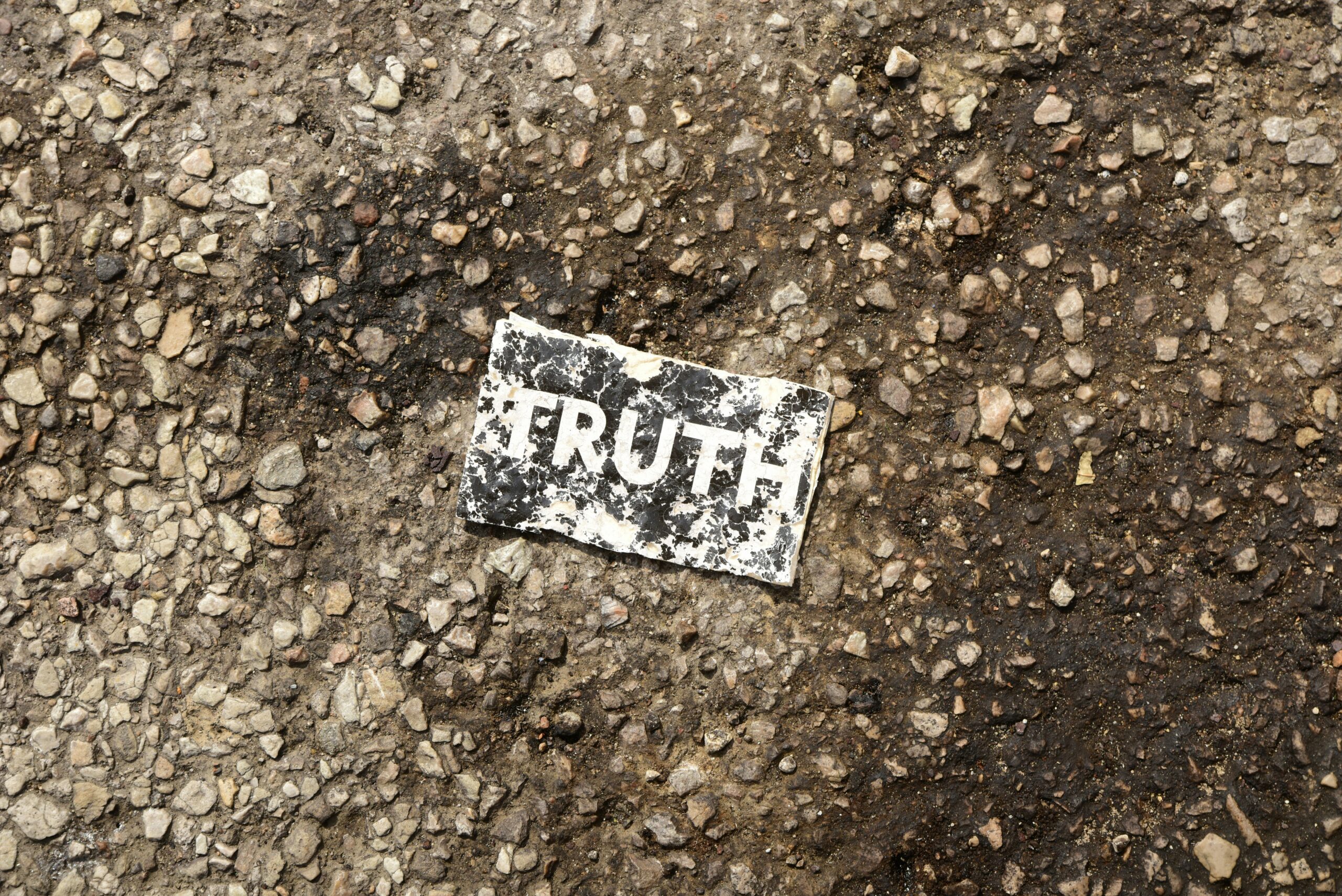
    The classic Rabbinic axiom, “The seal of God is truth” (Chosamo shel Hakadosh Baruch Hu emes), stems from the Talmud (Shabbat 55a). In Judaism, truth (יַהֲדוּת) is not just a concept, but the very signature of Hashem, underpinning the Torah (תּוֹרָה) and the stability of the entire physical and spiritual universe.

    The Meaning of the Seal

    The Signature: Just as an author signs the opening or closing of a book, Hashem embeds emes (אמת – Aleph, Mem, Tav) into creation. The first letters of Genesis 1:1 spell emes, as do the final letters, showing that God’s truth wraps around the entirety of existence.

    Aleph, Mem, Tav: According to the Jerusalem Talmud and commentaries like the Maharal of Prague, these letters represent the beginning, middle, and end of the Hebrew alphabet. Unlike falsehood (sheker), which is top-heavy and unstable, truth is complete, unchanging, and enduring.

    The Elimination Test: The Maharal notes that if you remove the aleph (the beginning) from emes, you are left with mes (death). Absolute truth must be perfectly intact; even a fraction of a percent of a lie ruins the entirety of the truth.

    How Truth Applies to the Torah

    Because Hashem’s signature is truth, His blueprint for the world—the Torah—is called Toras Emes (a Torah of truth). In Jewish thought, studying the Torah and aligning one’s life with middas ha’emes (the attribute of truth) is the highest form of connecting to the Divine.

    The concept that “the seal of God is truth” (Emes / אֱמֶת) is a foundational principle in Jewish thought, derived directly from the Talmud and embedded into the very fabric of Creation and the Torah.

    1. The Source in the Talmud

    The famous axiom “The seal of the Holy One, Blessed be He, is truth” (Chotamo shel Hakadosh Baruch Hu Emet) is recorded in the Talmud in tractate Shabbat (55a), cited in the name of Rabbi Chanina. In Jewish legal documents, a seal confirms authenticity and finality; thus, truth is God’s signature on reality.

    1. The Alef-Mem-Tav Encryption

    The word for truth, Emes (אֱמֶת), consists of the first, middle, and final letters of the Hebrew alphabet (Alef, Mem, Tav). Commentators explain this signifies that truth spans from the absolute beginning to the absolute end, encompasses all things, and is entirely unchanging.

    1. Stamped in the Torah and Creation

    According to Rabbinic tradition, this seal is physically encoded into the text of the Torah itself:

    The Opening: The first three words of the Torah (Bereishis Bara Elokim) end with the letters Tav, Alef, and Mem (spelling Emes in reverse).

    The Conclusion of Creation: The final letters of the three words that conclude the account of Creation (bara Elokim la’asot – Genesis 2:3) spell Emes forward.

  • The Reason for Creation was for the Enigmatic Mitzvah in the Torah Known as Bikkurim (First Fruits)

    The Reason for Creation was for the Enigmatic Mitzvah in the Torah Known as Bikkurim (First Fruits)

    In Judaism, Bikkurim (the commandment of bringing the first fruits to the Temple is deeply tied to the purpose of creation. Sages explain that the universe was created to foster hakaras hatov (gratitude) and human partnership with God, making thankfulness a fundamental reason for the world’s existence.

    The Beauty of the Mitzvah

    The Procession: Farmers didn’t just drop off fruit; they traveled to Jerusalem in joyous, singing processions accompanied by flute music, with their baskets ornately decorated.

    The Seven Species: The commandment applies specifically to the Seven Species of Israel: wheat, barley, grapes, figs, pomegranates, olives, and dates.

    Egalitarian Pride: The Talmud notes that the wealthy brought their fruits in gold or silver baskets, while the poor brought theirs in simple wicker baskets. The priests would return the gold baskets to the rich, but they kept the wicker baskets given by the poor—highlighting that effort and personal investment make a gift precious

    The Midrashic Connection: Breshis vs. Bishvil Reishis

    The Linguistic Link: The Torah opens with the word B’reishis (“In the beginning”) The first fruits are called reishis (“the first”).

    The Creation Purpose: Midrashic teachings (such as Bereishit Rabbah 1:6) explain that the word B’reishis can be read as bishvil reishis—meaning “for the sake of the first,” referring directly to the bringing of Bikkurim.

    Why Gratitude Defines the Purpose of Creation

    Overcoming Human Arrogance: When a farmer works hard to cultivate the land and produce a harvest, it is natural to feel, “My own power and the might of my own hand have won this wealth for me” (Deuteronomy 8:17).

    The Attitude of Gratitude: According to commentaries like the Alshich (on Deuteronomy 26:2) and insights on ⁠Bikurim at Berot Batayin, Bikkurim exists to shatter that illusion. It forces humanity to acknowledge that the rain, soil, sun, and life itself are divine gifts.

    The Ultimate Goal: The purpose of creation is to bring humanity to the realization that we are partners in God’s world. Expressing profound gratitude for the physical bounty of the Land of Israel (the Seven Species) serves as the ultimate recognition of the Creator.