

Category: Uncategorized

  • Anger is Regarded as One of the Most Destructive Forces a Person Can Experience

    Anger is Regarded as One of the Most Destructive Forces a Person Can Experience

    Why Anger Is Debilitating

    • Loss of Wisdom: The Talmud teaches that anger causes a person’s wisdom and intellect to depart, leading to regrettable, instinct-driven actions.
    • Equivalent to Idolatry: Maimonides rules that anger is akin to idol worship, as it implies a rejection of Divine Providence and a desire to control outcomes.
    • The Cost of Outbursts: Even great leaders like Moses faced severe consequences for anger; his striking the rock denied him entry into the Promised Land.

    How to Overcome It

    • Recognize Hashem’s Control: Jewish teachings emphasize that acknowledging God’s hand in all events is the ultimate antidote to anger, viewing those who wrong us as mere “messengers.”
    • Pause and Reflect: As exemplified by Hillel, taking a moment to cool down allows wisdom and perspective to return, helping maintain composure.
    • Focus on Compassion: Judaism mandates apologizing and seeking forgiveness to heal interpersonal ruptures, rather than harboring grudges.
  • 77 Amazing Things About Our Beloved Land of Israel on Her 77th Birthday

    77 Amazing Things About Our Beloved Land of Israel on Her 77th Birthday

    The intertwined significance of the Jewish people and the Land of Israel is the defining core of Jewish history, identity, and faith. Spanning over 3,000 years, this bond encompasses the origins of the people, the text of their foundational scriptures, and their ongoing cultural and spiritual heartbeat.

    The Biblical and Historical Cradle

    • Ancestral Origins: The connection begins with the patriarchs—Abraham, Isaac, and Jacob—who settled in the land. It is the birthplace of Jewish civilization, language, and nationhood.
    • The Promised Land: According to the Torah, the land was divinely promised to the Jewish people. It is the setting where the Kingdom of Israel and the Kingdom of Judah were established over three millennia ago.

    Spiritual and Religious Foundation

    • Commandments (Mitzvos): A large portion of Jewish law and tradition, such as agricultural laws and dietary rules, can only be fulfilled within the physical borders of the Land of Israel.
    • Jerusalem and the Temple: Jerusalem is the spiritual center of Judaism. The ancient Temples—focal points of Jewish worship and sacrifice—were located on the Temple Mount.
    • Prayer and Yearning: The connection transcends physical presence. For centuries in the diaspora, Jews worldwide have faced toward Jerusalem during daily prayers, prayed for rain in its seasons, and recited “Next Year in Jerusalem” at the end of Passover and Yom Kippur.

    Exile and Continuity

    • The Diaspora: Following the Roman destruction of the Second Temple in 70 CE and the subsequent expulsion, the Jewish people were scattered across the globe in a state of exile (galus).
    • Continuous Presence: Despite this dispersion, a continuous Jewish presence remained in the land throughout the centuries, reinforcing the belief that the separation from the homeland was an unnatural state
  • Kiddush Hashem & Chillul Hashem – What Makes These Two Aspects of Judaism so Critical

    Kiddush Hashem & Chillul Hashem – What Makes These Two Aspects of Judaism so Critical

    In Judaism, Kiddush Hashem (sanctification of God’s name) and Chillul Hashem (desecration of God’s name) are foundational mitzvot (commandments) dictating that a Jew’s public behavior, ethics, and choices reflect directly upon the Creator, the Torah, and the Jewish people.

    Both concepts are derived from the Torah portion of Emor in Leviticus:

    The Commandment: “You shall not profane My holy name, that I may be sanctified among the Israelite people” (Leviticus 22:32). Kiddush Hashem (Sanctifying God’s Name)

    Everyday Actions: Acting with extreme integrity, honesty, and kindness so that others observe your behavior and say, “How beautiful must be the God and the Torah that inspired this person”.

    Ultimate Sacrifice: Historically, it represents being willing to make the ultimate sacrifice of life itself rather than transgressing the three cardinal sins: idolatry, murder, and forbidden sexual relations.

    Spiritual Priority: It is the active choice to make your relationship with God the focal point of your life, letting it guide your decisions and interactions.

    Chillul Hashem (Desecrating God’s Name)

    Ethical Lapses: Committing unethical or immoral acts—especially for individuals who are seen as learned or representing the community. The Talmud (Yoma 86a) suggests that something as seemingly minor as failing to pay a merchant on time can cause a Chillul Hashem.

    Spiteful Sins: Willfully violating a Torah law out of spite or arrogance (rather than yielding to natural temptation), thereby making a mockery of God’s laws.

    Severity: In Judaism, Chillul Hashem is considered a profound spiritual offense. The sages explain that it is so serious that true atonement requires sincere repentance, the Day of Yom Kippur, personal suffering, and even death to completely wipe the slate clean.
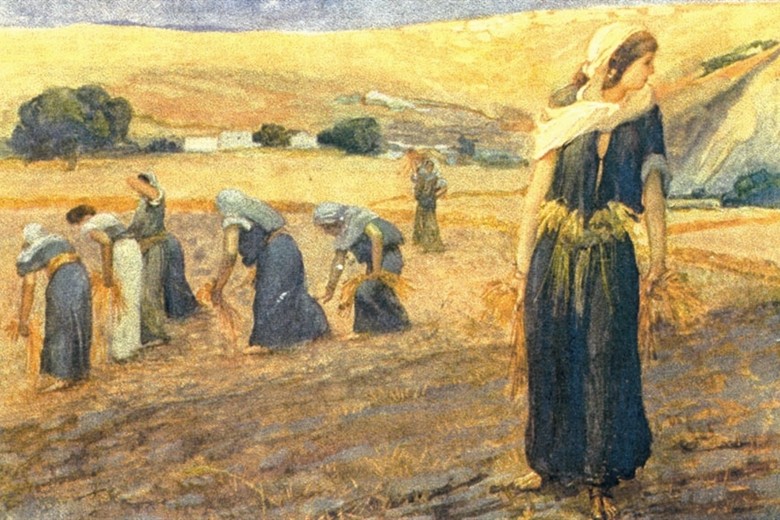

  • Nothing is More Important in Judaism Than Modesty – It Goes Far Beyond How we Dress

    Nothing is More Important in Judaism Than Modesty – It Goes Far Beyond How we Dress

    The two largest misconceptions about tzniyus are (1) that it’s just about clothing and (2) that it’s just for girls. Each of these is wholly inaccurate. Yes, how much skin a person displays is an aspect of modesty, but there’s so much more to it than that. How we act, how we talk, and how we treat others are all a part of tzniyus, which doesn’t mean to be “modest” so much as to act with propriety and dignity.

    Modesty, known in Hebrew as Tznius, is a deeply cherished value in Judaism, though the tradition does not categorize it as the single most important concept. Instead, Judaism places the ultimate emphasis on performing mitzvot (commandments), pursuing justice, and treating others with respect.

    If you’re interested in how tznius functions within Judaism, here is how the tradition approaches it:

    • Beyond Clothing: While popular culture often associates it primarily with dress, tznius actually encompasses behavior, speech, and attitude. It promotes dignity, humility, and privacy.
    • For Men and Women: Modesty applies to both men and women. Both are expected to avoid boasting, avoid drawing undue attention to themselves, and behave with respect toward others.
    • The Deeper Meaning: Many Jewish scholars describe tznius not about hiding, but about guarding what is deeply valuable. By focusing less on external flashiness, the goal is to emphasize the inner character and soul.
  • We Keep Our Arch Enemies Yishmael and Eisav Apart is Through Observance ofShabbos

    We Keep Our Arch Enemies Yishmael and Eisav Apart is Through Observance ofShabbos

    In Jewish tradition, the Friday night Kiddush serves as a spiritual mechanism to separate and elevate the Jewish people from the 70 nations of the world, represented historically by the archetypal sibling rivalries of Esau (Edom) and Ishmael.

    The Torah commands: “You shall not plow with an ox and a donkey together” (Deuteronomy 22:10). In Jewish mysticism (the Zohar), this law is a warning about global history. It indicates that if the spiritual forces of Eisav and Yishmael were to unite or “plow together,” their combined power could destroy the entire world

    Eisav (Shor / Ox): Symbolizes brute strength, worldly power, and the pursuit of domination. However, the Ox also has a holy dimension, representing Moshiach ben Yosef (the Messiah connected to physical labor, building, and Jewish survival).

    Yishmael (Chamor / Donkey): Symbolizes raw materialism, unbridled desires, and the stubborn resistance to spiritual restraint. Despite this, the Chamor also possesses a holy side, representing Moshiach ben Dovid (who famously rides into Jerusalem on a donkey, signifying humility).

    The connection between these concepts is deeply rooted in Kabbalah and Jewish philosophy:

    • The Symbolism of Wine: The numerical value (gematria) of the Hebrew word for wine (yayin) is 70, which parallels the 70 nations. Reciting the blessing over wine elevates the number 70 into a state of holiness.
    • The 70 Words of Kiddush: Mystical texts like the Zohar point out that the Friday night Kiddush often corresponds in word count to the 70 root nations. By reciting it, the Jewish people symbolically bind and elevate these earthly forces of the world into the realm of the sacred.
    • Separating Esau and Ishmael: Because Shabbos is inherently a day of peace and divine harmony, it acts as a metaphysical boundary that keeps the chaotic, external hostilities of the “70 nations”—often personified in Rabbinic literature by Esau (who stands for Rome/Western civilization) and Ishmael (the Islamic world)—from destroying the Jewish people
  • 7 Wondrous Gems from Pirkei Avos That Will Elevate Your Soul and Touch Your Heart

    7 Wondrous Gems from Pirkei Avos That Will Elevate Your Soul and Touch Your Heart

    Pirkei Avos (Ethics of the Fathers) is the foundational ethical and spiritual backbone of Judaism. Unlike the rest of the Mishnah, which focuses on strict legal codes, this tractate contains the personal maxims, virtues, and spiritual insights of over 60 sages. It outlines how to live a meaningful life.

    The Core Spiritual Framework

    Character Development: It establishes the concept that derech eretz kadma leTorah—proper etiquette and ethical character must precede Torah study. The teachings ask not just what to do, but what kind of person to become.

    The Transmission of Tradition: The very first passage maps the unbroken chain of the Oral Torah from Moses at Mount Sinai through the prophets and early sages.

    Pillars of the World: One of its most famous maxims teaches that the world is sustained by three things: Torah study, the service of God (prayer), and acts of loving-kindness. Spiritual Teachings: It dives deeply into the human condition, free will, humility, and the importance of community, offering practical wisdom for daily life.

    Pirkei Avos is studied by Jews of all backgrounds to build a moral universe. For nearly two millennia, it has been the custom to study one of its chapters every Shabbat afternoon during the spring and summer months (between Passover and Shavuos or Rosh Hashanah). This period serves as spiritual preparation for the ongoing reception of the Torah

  • Success in War for the Jewish People Only Comes From Hashem Through Our Merit

    Success in War for the Jewish People Only Comes From Hashem Through Our Merit

    The concept that ultimate victory and protection for the Jewish people stem directly from Divine Providence (Hashem), Torah, and living a Jewish life is a foundational principle in Jewish thought. This idea is understood through several core perspectives in Judaism:

    Divine Intervention (Siyata D’Shamaya): The Torah explicitly states that when the Jewish people go to war, it is Hashem who ultimately delivers the enemy into their hands. The awareness that Hashem is the ultimate combatant emphasizes that victory requires deep faith, spiritual purity, and trust.

    The Spiritual Front: Throughout Jewish history, the spiritual efforts of the people have been seen as just as critical as the physical battlefield. Torah study and fervent prayer (tefillah) are considered forms of “sacred ammunition” and protection.

    The Rambam’s Perspective: While acknowledging that the Jewish people have faced historical defeats, the Rambam interprets the command to go to war as an active mandate to eliminate fear and place complete faith in God, transforming the battlefield into an opportunity for Kiddush Hashem (sanctifying God’s Name).

    Physical and Spiritual Partnership: While Hashem grants the ultimate victory, Judaism teaches that humanity is Hashem’s partner in creation. Therefore, engaging in necessary self-defense and taking practical action (hishtadlus) is also required.

  • 10 Incredible Stories of Hasgachah Pratis (Divine Providence) That Will Make Your Soul Fly

    10 Incredible Stories of Hasgachah Pratis (Divine Providence) That Will Make Your Soul Fly

    Hashgacha Pratis (Hebrew: השגחה פרטית) translates to “Divine Providence”. In Jewish theology, it is the fundamental belief that G-d is intimately involved in the daily lives of individuals, continuously directing and guiding even the smallest details of the universe.

    The Core Concept

    While Hashgacha Kelalit (general providence) refers to G-d maintaining the overarching laws of nature, Hashgacha Pratis signifies His specific, focused attention on every individual creature and event. According to Judaism, nothing happens by pure coincidence; every blade of grass that sways or challenge you face is part of a deliberate, Divine design.

    Differing Philosophical Views

    While all mainstream Jewish scholars agree that G-d exercises Divine Providence, the extent of its detail has been a subject of deep debate:

    • Rambam (Maimonides): Taught that Hashgachah Pratis applies primarily to humans. Because humans possess intellect and free will, G-d’s detailed supervision corresponds directly to an individual’s spiritual and intellectual connection with the Divine. He posited that non-human elements of the natural world are governed by general laws.
    • Ramban (Nachmanides): Argued that G-d’s detailed providence encompasses all of creation. Every occurrence is a result of specific Divine decree rather than just the “laws of nature.”
    • The Baal Shem Tov (Founder of Chassidism): Expanded the concept significantly. He taught that Hashgachah Pratis extends not just to humanity, but to every leaf that falls or creature that moves. He emphasized that even the seemingly mundane things a person sees or hears serve as a personal directive or lesson from G-d.

    Free Will and Providence

    A central challenge in Jewish philosophy is balancing Hashgacha Pratis with human free will. If God dictates every detail of our lives, how are we responsible for our choices?

    Classical thinkers (like Rambam) resolve this by asserting that while G-d knows the future and directs the world, He leaves human moral choices entirely in the hands of the individual. Our circumstances, environment, and opportunities are orchestrated by God, but our reaction and moral decisions remain fully within our own power.

    Purpose and Impact

    Embracing this concept is a core pillar of Bitachon (trust in God). It provides followers of Judaism with profound comfort and meaning, assuring them that every hardship, triumph, and encounter is purposeful and divinely orchestrated for personal growth and spiritual refinement

  • 7 Torah Gems That Will Illuminate Your Soul and Change Your Life

    7 Torah Gems That Will Illuminate Your Soul and Change Your Life

    Today’s episode is a potpourri of Torah topics, and we are going to delve into some of the most beautiful and holy aspects of Judaism in this lecture.

    Why we take 3 steps back during davening (prayer)

    The power of the number 516

    The merit of our beloved mother Rochel

    The chasm between the numbers 100 and 101

    How nothing is worse in life than being ungrateful

    The only 4 day periods in the Torah

    The specific reason why Hashem loved Avraham

  • My Personal Story – Cocaine to Amen

    My Personal Story – Cocaine to Amen

    Fueled by cocaine, I was involved in a 45-minute high-speed car chase with dozens of police cars in pursuit. It was then I realized the life I was living was going nowhere and desperately needed to change. That change came through embracing my Jewish roots and a determination to learn and live by the Torah, so dear to us as Jews. This is a fascinating story of personal redemption and growth, capable of inspiring anyone who reads it. My goal is to awaken my fellow Jews from the spiritual darkness engulfing so many, and for this story to serve as a guiding light toward a rebirth of values, morals, and ideology. Here is my story: Cocaine to Amen!