
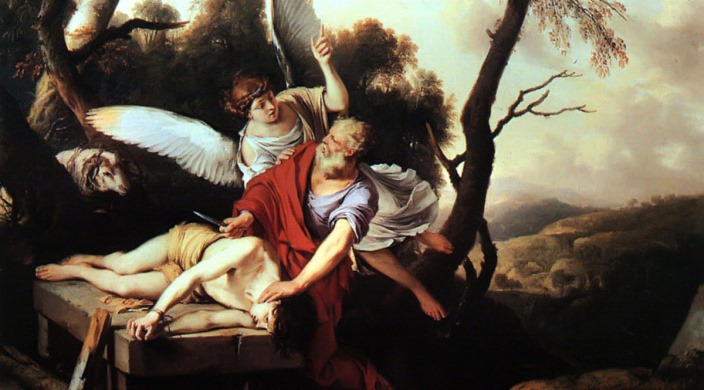
The Akeidas Yitzchak (the Binding of Isaac) is considered the absolute apex of spiritual devotion in Jewish history. It is so precious to Hashem that traditional Jewish law (Shulchan Aruch, Orach Chaim 1:5) prescribes reciting the account from Genesis 22 every single morning during the preliminary Shacharit prayers.
Reciting it daily serves as a powerful spiritual tool, a legal defense mechanism before the Heavenly Court, and a blueprint for daily living.
1. Invoking “Zechus Avos”(The Merit of the Ancestors)
In the daily liturgy immediately following the reading, we ask Hashem to remember the Akeidah to override strict judgment with mercy.
- The Legal Defense: The Sages teach that when the Jewish people sin, Hashem looks at the boundless devotion of Abraham and Isaac and tempers His wrath.
- The Promise of Survival: By matching the ultimate trait of Chesed (Abraham’s absolute kindness) with Gevurah (Isaac’s absolute restriction and awe), our ancestors created an eternal spiritual credit account for their descendants. We mention it daily to draw from that spiritual inheritance.
2. A Double Test: The Selfless Devotion of Two Adults
While popular culture often views this as a test of Abraham alone, Jewish tradition clarifies that Isaac was a fully grown adult of 37 years old at the time.
- Abraham’s Sacrifice: Abraham spent his entire life preaching against child sacrifice and building a legacy of hospitality and love. To obey a command that seemingly destroyed his entire moral philosophy, his emotional sanity, and the divine promise of an heir required an unparalleled level of pure, unquestioning faith.
- Isaac’s Sacrifice: Isaac was physically stronger than his aging father. He could have easily resisted. Instead, the Midrash explains that Isaac actively begged his father to bind him tightly so he would not flinch and invalidate the offering. It was a unified, harmonious act of total submission to Hashem.
3. Subduing the “Yetzer Hara” (The Evil Inclination)
The Shulchan Aruch states a primary psychological reason for the daily recital: to humble and subdue our own animalistic urges.
- Reading how Isaac was willing to lay down his physical life inspires us to “sacrifice” our own destructive desires, pride, and material laziness every morning before we step out into the world. It sets the spiritual tone for the day: putting Hashem’s will above our own comfort.
4. Spiritual Protection in Exile
The Zohar (the foundational text of Kabbalah) explicitly links the daily reading of the Akeidah to divine protection from worldly dangers.
- The Zohar notes that when we recount how the angel stopped the knife and said, “Do not stretch out your hand against the lad,” a heavenly echo replicates that command in the spiritual realms. It shields the Jewish people from spiritual and physical harm while navigating the harsh realities of exile.
5. Redefining “Sacrifice” Forever
Ultimately, the Akeidah is precious because it permanently shattered the pagan ideal of human sacrifice. Hashem never wanted Isaac’s blood; He wanted the will.
- By stopping the act and substituting a ram, Hashem established the permanent boundary that human life is sacred, and the highest service of God is choosing to live for Him through the Torah, rather than dying for Him.