
The connection between ants, locusts, and mother birds lies in a profound Talmudic teaching about the true source of human morality.
In the Talmud (Eruvin 100b), Rabbi Yochanan states that even if the Torah had never been given at Mount Sinai, humanity could have learned its core ethical, social, and relationship laws simply by observing the specific, instinctual behaviors of G-d’s creatures. While King Solomon famously highlighted the ant and the locust in Proverbs as symbols of independent wisdom, the Sages of the Talmud integrated them with the traits of birds to map out the foundational pillars of human decency.
1. The Ant: Financial Honesty and Work Ethic
The Talmud teaches that we would have learned the prohibition against stealing and the value of hard work from the ant.
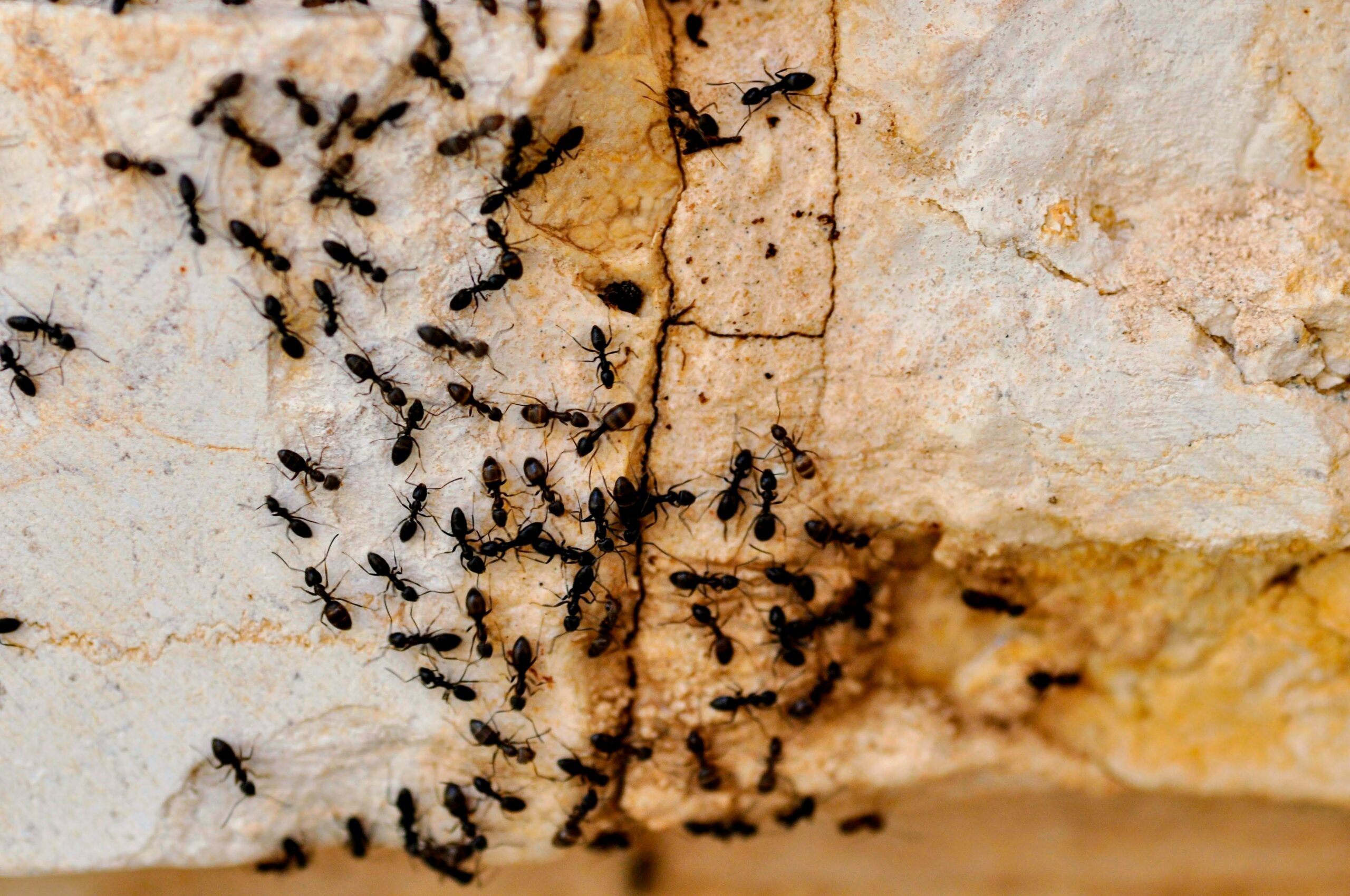
- The Observation: An ant will never take a grain of food that has already been claimed by another ant. Furthermore, King Solomon noted in Proverbs 6:6-8 that ants labor tirelessly to gather food in the summer for the winter, completely self-motivated without needing a ruler or overseer to force them to be productive.
- The Human Lesson: Respect for other people’s property and proactive, self-directed productivity are hardwired into the fabric of creation.
2. The Locust: Unified Social Order Without Tyranny
The locust represents the blueprint for perfect community organization and peer-to-peer cooperation.
- The Observation: In Proverbs 30:27, King Solomon marvels: “The locusts have no king, yet they march in formation”. Unlike bees or ants which rely on a queen, millions of locusts can instantly form a perfectly synchronized swarm, moving, pivoting, and traveling as a single unit without a centralized leader directing them.
- The Human Lesson: True societal unity and effective collaboration do not require a dictator or an oppressive governing force. When individuals align toward a shared purpose, harmony can be achieved organically.
3. The Mother Bird: Boundaries and Familial Compassion
The mother bird is the ultimate classroom for empathy, respecting boundaries, and protecting the next generation.
- The Observation: This is rooted in the biblical mitzvah of Shiluach HaKeiz (Deuteronomy 22:6-7)—the commandment to chase away a mother bird before taking her eggs or chicks. Torah commentators note that even in the wild, a mother bird will hover over her nest to shield her young, demonstrating a raw, G-d-given protective instinct.
- The Human Lesson: Humanity is meant to learn boundaries and basic compassion from this. If G-d demands that we show sensitivity to the emotional instincts of a bird, how much more careful must we be with the feelings and dignity of our fellow human beings?
The “Mind-Blowing” Philosophical Twist
The ultimate realization of this connection is that nature is not morally neutral.
In Jewish thought, G-d did not just create animals as meat or pests; He designed their biological instincts to act as a living, breathing mirror for the human soul. The ant teaches us how to behave individually (honesty), the locust teaches us how to behave collectively (community), and the mother bird teaches us how to behave relationally (compassion).