
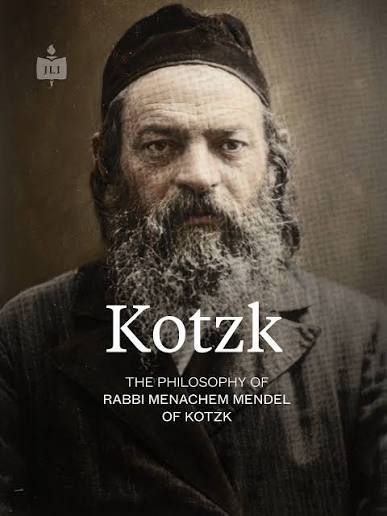
Rabbi Menachem Mendel of Kotzk (the Kotzker Rebbe, 1787–1859) revolutionized Judaism through his radical, uncompromising pursuit of emes (authenticity/truth) and his fierce war against hypocrisy and self-deception. His genius lay in stripping away comfortable religious complacency, demanding that individuals take personal ownership of their spiritual lives and serve God with their whole, flawed humanity.
The Core Pillars of Kotzker Torah
- Radical Authenticity (Vorhayt over abstract Emes): The Kotzker famously shifted the concept of truth from an abstract philosophical ideal to vorhayt—a Yiddish term meaning “realness” or absolute personal genuineness. He taught that a mitzvah performed with even a whiff of self-interest or superficial imitation is a falsification of Judaism.
- Human Holiness (Kedoshim Tihyu): Disdaining the pursuit of angelic perfection, the Kotzker interpreted verses like Exodus 22:30 (“You shall be holy people to Me”) to mean: “You have to be holy in a human way.” God has plenty of angels; the Torah’s genius is in elevating regular human beings with all their temptations, struggles, and doubts.
- The Inward Gaze: In a culture obsessed with looking to the heavens or the mystical beyond, the Kotzker redirected focus back to the self. As he famously noted: “People tend to look upwards, contemplating the mysteries of the heavens. They would do well to look inward and examine what’s happening within themselves.”
Famous Paradoxes and Teachings
- On God’s Presence: “Where is God? Wherever He is allowed in.” The Kotzker taught that you do not wait passively for a divine revelation; you must actively find God in the mundane, everyday corners of your life.
- The Broken Heart: “There is nothing more complete than a broken heart.” He valued the raw, honest pain of a person wrestling with their shortcomings over the hollow pride of a person who thinks they have achieved righteousness.
- On Self-Creation: One of his most famous transmitted encounters features a student who learned that a human is a human, an angel is an angel, and a man can rise higher than an angel. The Kotzker’s ultimate takeaway: God created the beginning (Bereishis); after that, man must create his own world.